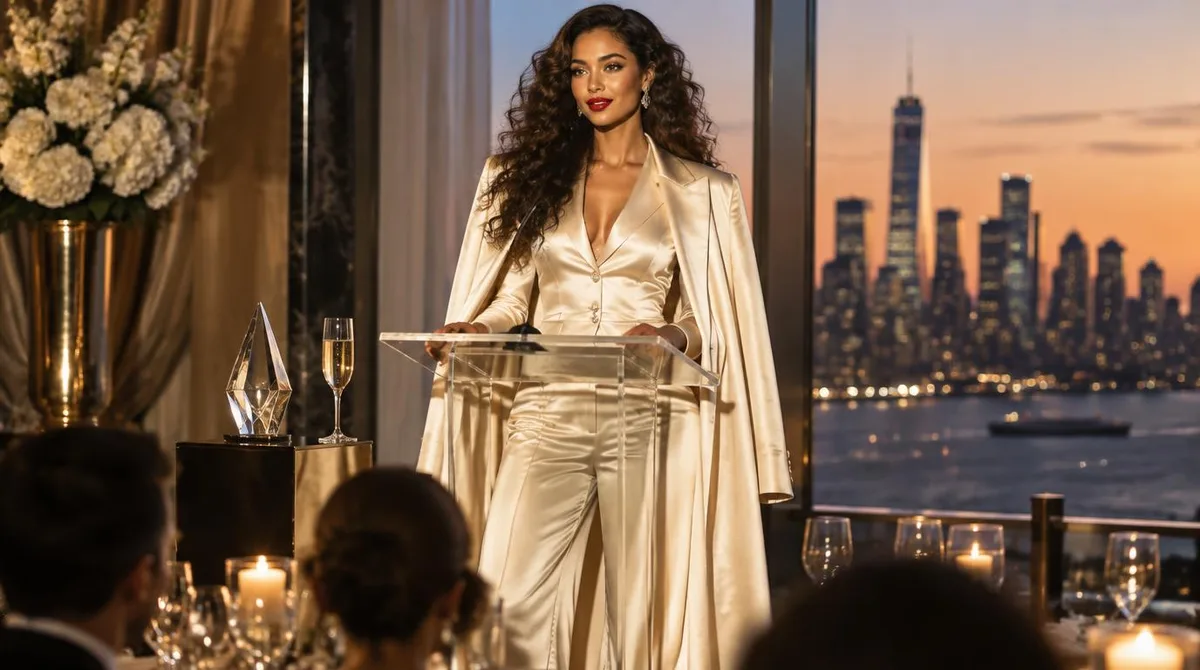
Tracee Ellis Ross went to the 2026 WWD Honors on Tuesday, Oct. 27, to present Ulta Beauty with the Public Beauty Company of the Year award — and she brought her big curls out of the studio. Per WWD, the actress and beauty entrepreneur usually saves that particular hairstyle for Pattern Beauty shoots. At Cipriani South Street in New York, she gave it a night out.
The look carried a double signature. The hair was a voluminous, rounded shape with tightly curled texture, extending well beyond her shoulders, paired with a bold red lip. The clothes came from Celine's fall 2026 ready-to-wear collection, designed by Michael Rider — an ivory satin ensemble of a collared jacket and fluid, wide-leg trousers, with a coordinating coat draped over her shoulders for part of the evening. Ross bought it herself. "I'm wearing a little something I bought from Celine, this beautiful outfit," she told WWD.
For a newcomer, the evening is best read as three overlapping stories: what WWD Honors is, what Ross's presence signaled for her own company, and how the honorees mapped the current state of the industry. Here is each piece, explained.
What is WWD Honors, and why does it matter?
WWD Honors is the industry-awards evening attached to WWD's Apparel & Retail CEO Summit, held this year at Cipriani South Street in New York. Its function is simple: the trade paper names the companies and designers it judged most consequential, and the winners' list doubles as a snapshot of where the industry's power currently sits.
The 2026 list made that snapshot legible. LVMH's Bernard Arnault received the John B. Fairchild Honor. Haider Ackermann of Tom Ford and Michael Rider of Celine were recognized for womenswear and menswear design, respectively. G-III Apparel Group's Morris Goldfarb received the Creative Leadership Honor, and Henry Zankov was named One to Watch. Ross's award presentation — Ulta Beauty as Public Beauty Company of the Year — put a beauty company's retail achievement on the same stage as the fashion houses.
Why was Ross there as "a CEO," not just a guest?
Ross founded Pattern Beauty in 2019, and Ulta is its premiere retail partner, as she told WWD: "I am here showing up for my wonderful retail partner, Ulta. They are our premiere retail partner, so I'm here as a CEO." The framing matters. This was an appearance by a founder on behalf of her company's distribution relationship, not a celebrity cameo.
Her hair choice underlined it. Saving the big-curl look for Pattern shoots and then wearing it to an industry dinner reads as a founder putting her brand's visual language on the red carpet. The company itself has been moving beyond its original hair care offering, introducing body care products and entering Mexico through Ulta Beauty. At WWD's Los Angeles Beauty Forum in April, co-CEO Christiane Pendarvis discussed the brand's next chapter, saying the company was focused on building awareness and introducing more consumers to its products.
The beauty retail layer of the story is where this evening connects to the wider market — how founders, retailers and award platforms reinforce one another is a recurring theme in beauty coverage, and this dinner compressed it into one table.
What did the Celine outfit say about Michael Rider's moment?
The outfit was not incidental. It came from the fall 2026 ready-to-wear collection by Michael Rider — who was being honored the same night as Menswear Designer of the Year. A guest wearing the honoree's own design to the ceremony is the industry's quietest form of endorsement: the clothes speak for the designer, and the designer's award speaks for the clothes.
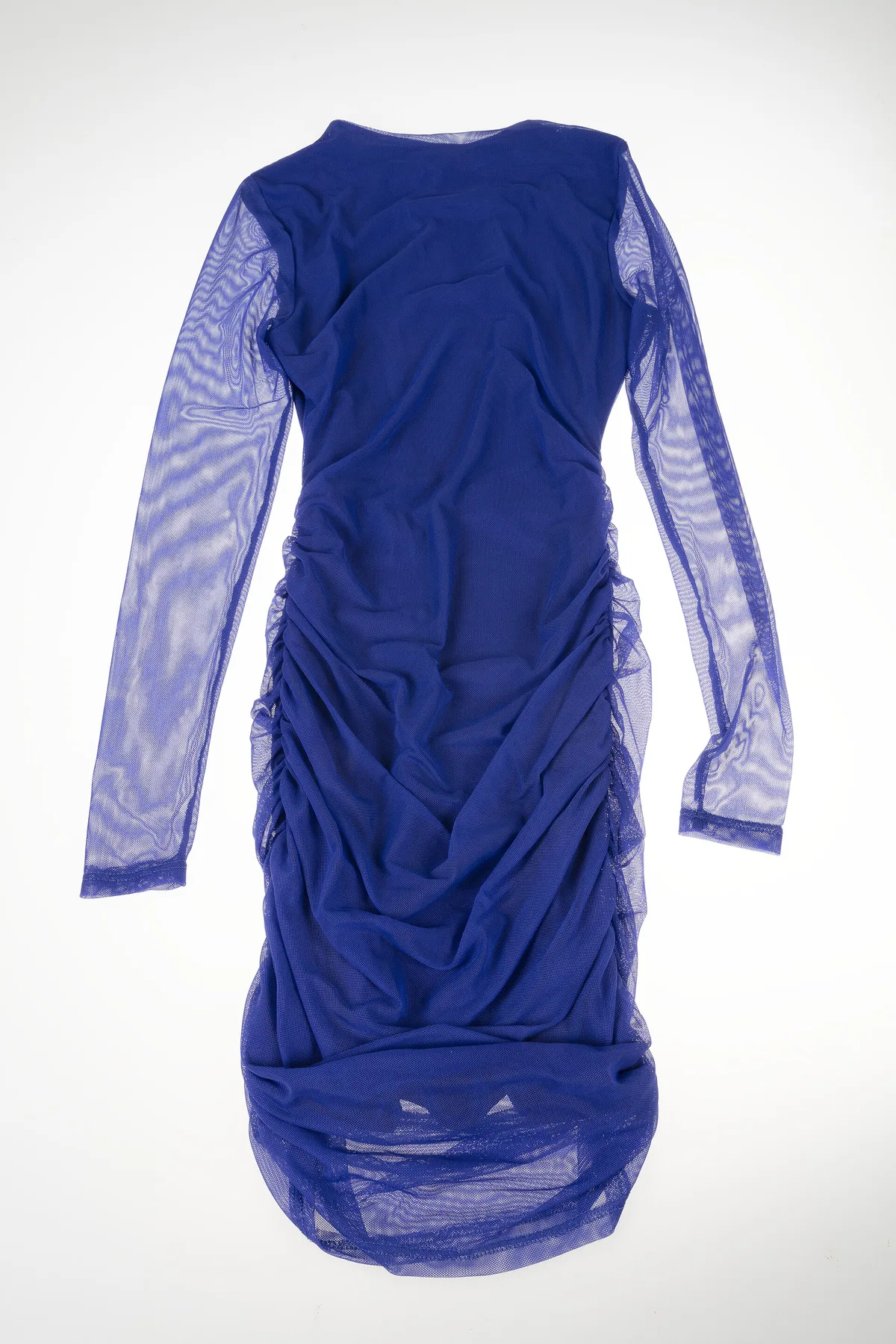
The pieces themselves read precisely: ivory satin, a collared jacket, fluid wide-leg trousers, a coat worn draped over the shoulders rather than fastened. Satin's liquid drape and the unfastened coat are the kind of details that reward close reading — the same attention we give in pieces on the slip dress and liquid minimalism, where fabric weight and how a garment hangs do most of the talking. Rider's menswear recognition, meanwhile, placed him alongside Haider Ackermann at Tom Ford on the design podium — two heritage houses, both currently under new creative direction, both validated in the same night. We covered a connected angle in Slip Dress Styling — The Slip Dress Renaissance: Why Designers Keep Returning to Liquid Minimalism.
What was the red-lip moment really about?
Ulta's president and CEO Kecia Steelman arrived in Dolce & Gabbana and a Fenty lip. "Even though you're a CEO, you can still have a little spice I think in your life, and then I'm wearing a Fenty lip, because I think a powerful CEO with a red lip is a statement," Steelman told WWD. Ross pointed out that the two CEOs had arrived with matching red lips without planning it. "See? We didn't even plan it," she said.
It is a small moment, but it is the evening's thesis in miniature: the leaders of two beauty companies — a brand and its retailer — dressed as themselves, and the matching lips made the partnership visible. Founders and executives increasingly use the red carpet as a brand channel, a dynamic that sits alongside fashion's own convergence stories, such as how streetwear and luxury swapped roles. For related coverage, see How Streetwear and Luxury Swapped Roles: A Convergence Story.
Why should a newcomer read this dinner closely?
Because it compresses the industry into a single guest list. A beauty founder presenting her retailer's award. A designer honored while his fall 2026 collection sits in the room on a guest. A luxury magnate, a creative leader and a One to Watch sharing one stage. Read the honorees and you have read the season's balance of power — which is, in the end, what a trade-paper awards night is for.
What remains unknown is the outcome of the moves made here: how Pattern's expansion beyond hair care and into Mexico through Ulta performs, and how Rider's and Ackermann's tenures at their houses evolve. The awards recorded the moment. The next chapters are still unwritten.