Streetwear and luxury swapped roles over roughly a decade, and the scoreboard is unambiguous. In 2017, Louis Vuitton — the archetypal European tuxedo house — walked a collaboration with Supreme, a New York skate brand, down its runway; three years later VF Corporation bought Supreme for 2.1 billion dollars, and in 2018 Virgil Abloh, a DJ-turned-designer with no classical couture training, took artistic direction of Vuitton menswear. The margins of the hierarchy did not blur. They reversed.
Where did the convergence actually begin?
Long before the runways noticed, in resale and scarcity economics. Streetwear had spent the 2000s perfecting the drop: limited quantities, fixed release dates, queues and resale premiums. Luxury, which had always sold scarcity through price, watched sneakers appreciate faster than handbags and drew the obvious conclusion. By the mid-2010s, houses were adopting the drop model wholesale — limited capsules, surprise releases, waitlists — while streetwear brands professionalized into full-fledged apparel companies. The mechanics converged first; the aesthetics simply followed the money.
The second vector was collaboration. When Gucci paired with The North Face in 2020, or when Balenciaga under Demna rebuilt itself around deliberately ordinary silhouettes elevated to couture prices, both sides admitted the transaction: streetwear supplied cultural heat, luxury supplied scale and margins. Neither pretended the arrangement was a fling.
What did Virgil Abloh change at Louis Vuitton?
Abloh's appointment in March 2018 was the convergence made personnel. He arrived with an architecture degree, a CV running the label Off-White, and a conviction that fashion was a conversation about reference rather than a lecture on craft. His June 2018 debut — a rainbow gradient runway on a Paris street with 3,000 guests including much of the music industry — reframed Vuitton menswear for an audience that had never considered it. He put sneakers and hoodies under the monogram, quoted Chicago rather than the Riviera, and made the house's menswear profitable and talked-about in the same season. His death in November 2021, mourned across both industries at once, confirmed what the appointment had proven: the border was gone.
The pattern outlived him. Pharrell Williams succeeded him at Vuitton in 2023; Nigo, founder of A Bathing Ape, took creative control of Kenzo in 2021. Luxury menswear's creative leadership now reads like a streetwear family tree.
Did the money actually follow?
Follow is an understatement. At its peak, the adidas partnership with Kanye West was reported to generate around 1.5 billion dollars a year in revenue — a figure that put one rapper's sneaker line on par with mid-sized luxury houses. VF paid 2.1 billion for Supreme, a label founded selling to skateboarders in downtown Manhattan. Meanwhile, resale platforms built market infrastructure where a pair of sneakers could trade like a stock, complete with price histories and bid-ask spreads. Capital had declared the convergence a permanent asset class, not a trend cycle.
| Old luxury logic | Converged logic |
|---|---|
| Scarcity through price | Scarcity through limited drops |
| Seasonal calendar, two shows | Rolling capsules and surprise releases |
| Couture-trained designers | Designers from music, street and subculture |
| Value held quietly in archives | Value traded openly on resale markets |
How did womenswear experience the same shift?
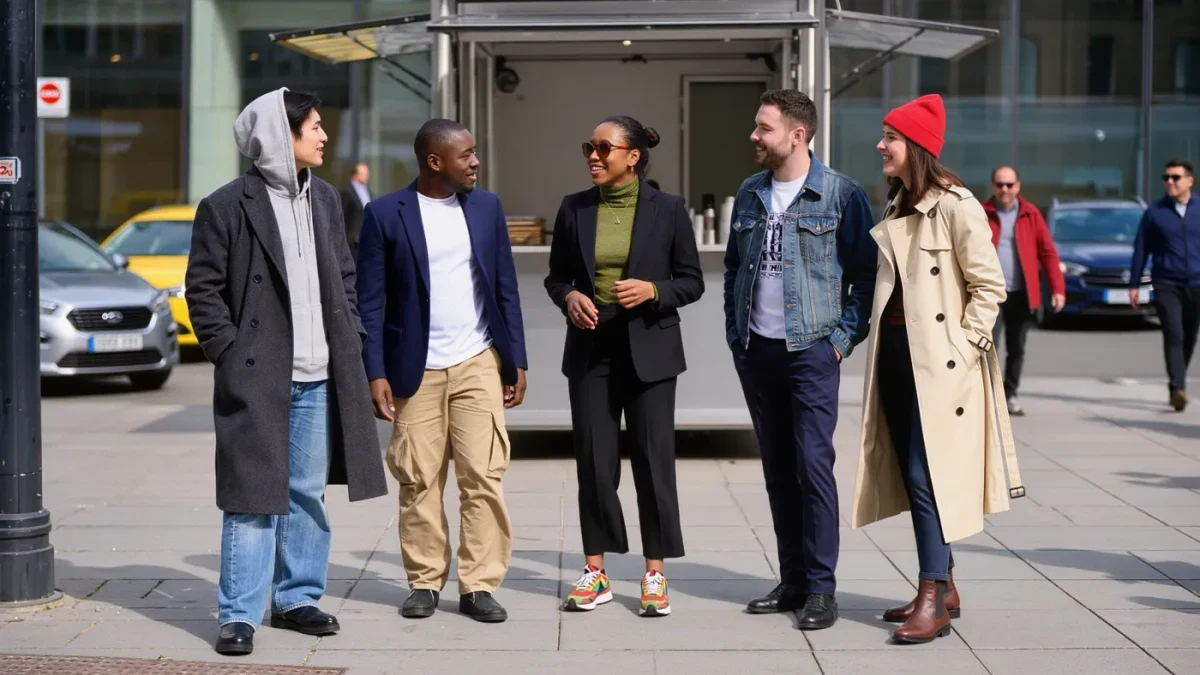
Differently, and later. Menswear was the convergence's laboratory because streetwear was structurally a menswear subculture, with its drop calendars, sneaker culture and collector psychology already in place. Womenswear arrived through the same door eventually: quiet-luxury minimalism absorbed streetwear's ease without its logos, and the oversized proportions pioneered by skate brands migrated into coats, shirting and tailoring across the board. The result is that gender boundaries loosened along with class boundaries — the same oversized blazer now reads as streetwear on one customer and as couture on another, depending on fabric and price. Houses noticed, and unisex capsules became a fixture of the late-2020s calendar. The swap of roles, in other words, was never only between two industries; it reorganized how an entire wardrobe signals status, replacing visible price with visible knowledge — of drops, of collaborations, of which silhouette belongs to which moment.
Who won the exchange?
Both, unevenly. Luxury gained access to younger customers it had been losing: the drop model and sneaker culture delivered a demographic that had no inherited loyalty to monograms. Streetwear gained margin and permanence — brands founded on printed tees now command luxury-level prices with luxury-level distribution. But the exchange had costs. When everything limited sells out instantly, demand is manufactured rather than earned, and when a subculture's uniform becomes a conglomerate's bestseller, the subculture moves on. The last cycle's rebellion is this cycle's department store stock, which is why the conversation has already shifted toward quiet luxury on one flank and a new underground on the other.
What happened to the sneaker at the center of it all?
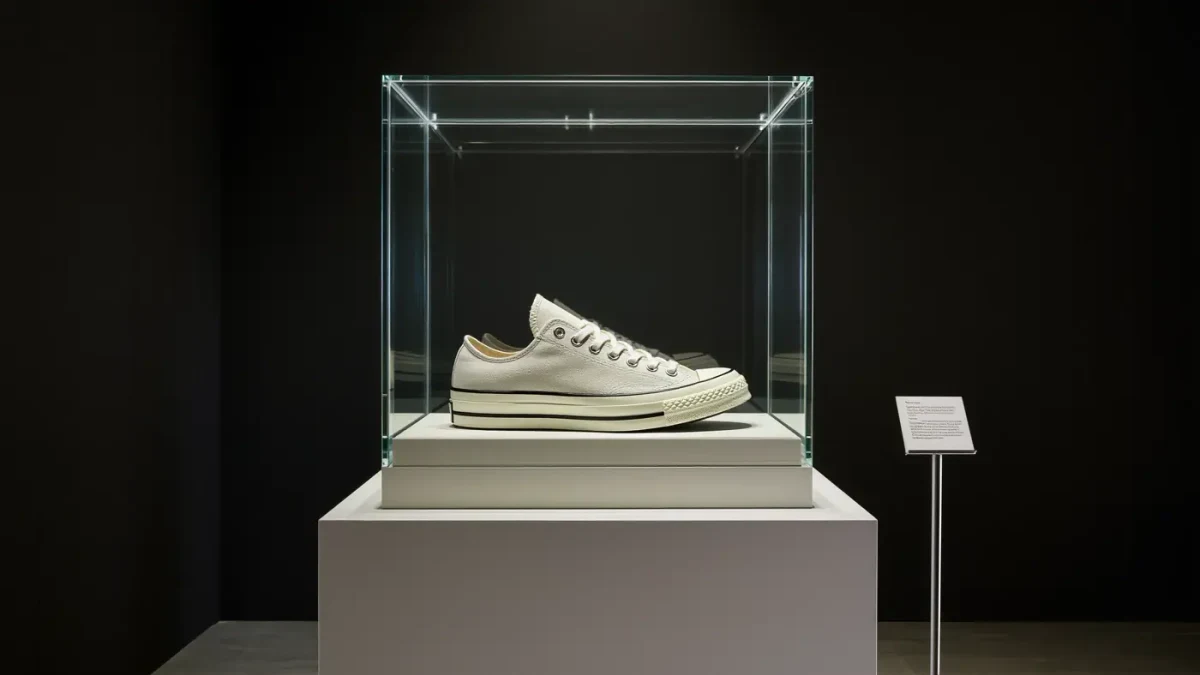
The sneaker was the convergence's primary instrument and its clearest barometer. Through the late 2010s, collaborations between luxury houses and sportswear giants sold out in minutes, and resale prices for the right pairs ran into four figures — numbers no leather loafer had commanded in living memory. Houses responded by making their own sneakers at couture prices, and for a season the most profitable item in many luxury stores was, objectively, a shoe with rubber soles. Then the market spoke twice: resale prices for hyped pairs corrected sharply in the early 2020s, and the sneaker-swap culture that had fed the cycle cooled with them. The silhouette survived — it is now simply part of every house's permanent range — but the speculative fever around it receded. That arc matters because it shows the convergence's engine precisely: scarcity, amplified by social media, converted into margin. When the scarcity stopped being believable, the premium narrowed, and both industries had to rediscover what they were selling beyond the waitlist.
Is the convergence cooling down?
The froth is. Supreme's reported sale in 2024 at a valuation below VF's purchase price signaled that resale-era multiples had corrected, and the post-2022 slowdown in logo-led luxury hit exactly the street-flavored product the convergence had crowned. Yet the structural changes are not reversible: drops, collaborations, sneaker-first menswear and resale liquidity are now permanent fixtures of how luxury operates. The cool-down ended the hype era, not the merger.
What does the convergence mean for a normal wardrobe?
Practically, permission. A tailored coat over a hoodie stopped being a contradiction the moment both halves shared a price bracket; a sneaker under a suit is no longer a statement but a default. The wardrobe consequence of the role swap is range: the same person can wear couture-grade leather goods at noon and a graphic tee at midnight, and no dress code objects. The verdict, a decade into the convergence: streetwear did not break into luxury. It moved in, redecorated, and became the landlord's favorite tenant.