Clothes last when the routine around them is boring. The proof sits in the wash cycle: water heating consumes about 90% of the energy a washing machine uses, and the federal ENERGY STAR program notes that, short of oily stains, cold water will generally do a good job of cleaning. Wash cooler, wash less. Repair earlier. The doctrine costs nothing.
The question of how to make clothes last longer is really a question of habits, and the habits are cheap. Below, advice from working repairers and laundry professionals gets sorted by what it costs, from nothing to a professional’s bench. Those planning a cold-season purchase first can read this as the companion to the winter coat buying guide on down, wool and puffer.
Care is the unglamorous half of style, and the style desk treats it that way: mend first, wash cool, store dry. The order matters. Done right, a wardrobe stops behaving like a subscription and starts behaving like an asset.
How Often Should Clothes Be Washed?
Less than the default. Patagonia’s care guidance puts a merino base layer at a wash every three to five wears, a figure the outdoor tester Will Renwick cites when explaining his own kit, and ordinary daywear can sit further apart still. The trigger is soil or smell, not the calendar. Readers following this should also see White Shirt Styling Guide: Ten Ways to Wear the Wardrobe's Hardest Classic.
Temperature is the second lever. ENERGY STAR calculates that switching a washer from hot to warm can cut energy use in half, and cold cycles keep dyes and elastic calmer for it. Renwick’s own default, read off care labels, is 30C: “if you don’t know, go low and slow.”
Which Laundry Habits Wear Clothes Out Fastest?
Heat and residue lead the list. Fabric conditioner “will start to damage and prematurely wear your clothes by clogging the synthetic fibres with a waxy residue,” explains David Lambert, managing director of the Laundry Republic service, and radiators are worse still: direct heat can change the shape of man-made fibres outright.
Mixing loads does slower damage. Heavy towels hammer stretch-woven fabrics on the final spin, and Lambert puts the timetable at six months before the fabric gives up and turns baggy. His fixes are dull on purpose: wash technical pieces separately and inside out, then keep them off the radiator.
Is Professional Repair Still Worth It?
It is the bargain of the wardrobe. Chris Hulse, co-owner of Sole and Trail in Kendal, prices a small gluing or stitching job at about £4 and says the pair “might last for another 12 months or even longer.” The 149m pairs of shoes the UK dumps in landfill annually are, he tells the Guardian, unacceptable when the vast majority can be fixed.
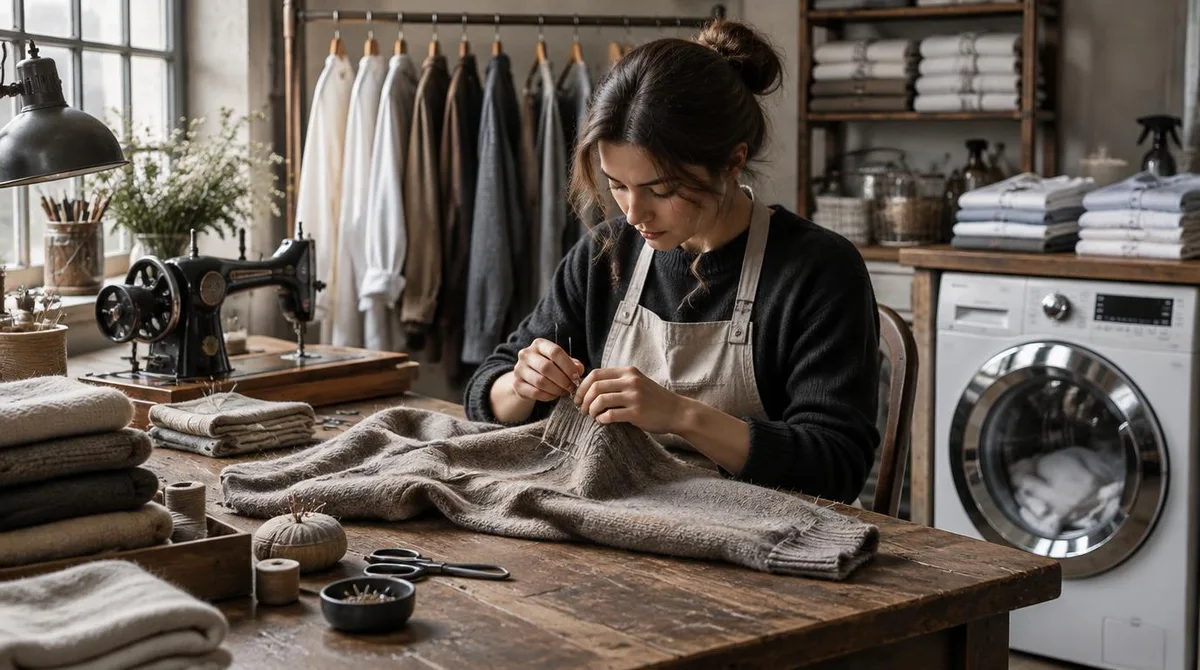
Repairers of clothes talk the same way. Joey Cope of Cobbler Cope in Newquay turns away very little: holes get patches, splits get leather reinforcement under the insole, and worn trainers now take rubber replacement soles for a fraction of a new pair’s price. Patagonia publishes repair guides of its own, and Mountain Rescue England and Wales sends damaged kit to Scottish Mountain Gear under its Zero to Landfill initiative. We covered a connected angle in Capsule Wardrobe Guide: Fewer Clothes, Better Outfits.
What Should Happen Between Wears?
Air first, storage second. Kit left balled up damp in a corner grows mould, Lambert warns, so damp clothes go straight onto a hanger or an airer. Odour has a recipe: Nancy Birtwhistle, author of Clean Magic, soaks laundry overnight in washing soda, though never wool or silk, which the crystals weaken.
Labels settle the remaining arguments. Technical fabrics often carry their own washing rules, from temperature to drying, Renwick notes, and the brand’s guidance beats habit every time. When in doubt, the low setting wins.
Conclusion: Buy Well, Then Keep It
Longevity is a temperament, not a product. The pieces that endure are washed cool, dried slow, mended early and given time off between wears. A £4 stitch that buys a year of service remains the cheapest thing in fashion.
None of this reads like a trend, and that is the point. The habits above come from people who clean, mend and re-proof clothes for a living, which makes them the closest thing the industry has to a consensus. Follow the labels, trust the repairers, and the years take care of themselves.