A capsule wardrobe is a small set of clothes chosen to work together, and the payoff is simple: fewer pieces, more outfits. This capsule wardrobe guide keeps the count near thirty, split across work, weekends and the days that blur the two. The method matters more than the number, and the method is patient.
The word itself carries the idea. Merriam-Webster defines the adjective capsule as "an extremely brief condensation: outline, survey" — a capsule review, a capsule of history. A capsule wardrobe does the same thing to a closet. It condenses everything a person actually wears into a working outline of it.
What follows is a framework, not a shopping list. The goal is a wardrobe where any two pieces agree, so mornings become selection rather than negotiation. For the fuller weekend-build version of this project, the earlier Capsule Wardrobe Guide: Building One Weekend That Lasts for Years walks the process step by step; this piece focuses on the thirty-piece structure itself.
What counts as one of the thirty pieces?
Count only the clothes that do real work: tops, trousers, dresses, outerwear, shoes and the bags that carry them. Leave out gym kit, occasionwear worn once a year, and anything kept purely for sentiment. Those live outside the capsule without apology.
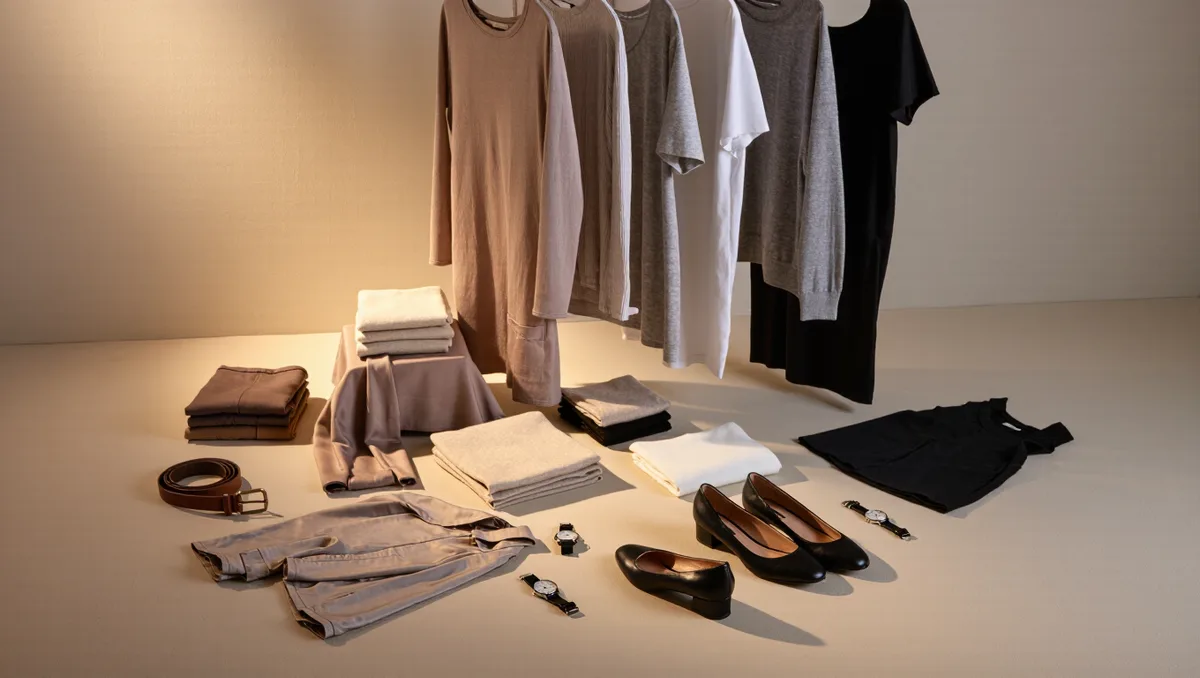
A workable split for thirty pieces looks roughly like this: eight to ten tops, four to five bottoms, two to three dresses or their equivalent, three layers such as a blazer and knitwear, two to three coats and jackets by climate, and five to six pairs of shoes. Accessories — scarves, belts, one everyday bag — flex the count without breaking it. The proportions shift with a person's week; someone in meetings five days out of five weights the split toward tailoring, and rightly so.
How does a palette keep thirty pieces talking to each other?
Color is the operating system of a small wardrobe. Choose two or three neutrals that flatter and repeat — navy, cream, charcoal and camel are the usual suspects — then allow two or three accent shades that appear in at least two pieces each. Every top should pair with every bottom. If a piece fails that test, it is a guest, not a resident.
This is where monochrome thinking earns its place. Our Monochrome Dressing Guide: How One Color Becomes a Whole Look shows how a single shade stretched across several pieces reads as deliberate rather than repetitive — a useful trick when the closet is small by design. Texture does the differentiating: a ribbed knit against wool trousers says something a flat cotton cannot.
Which pieces carry the most weight in a thirty-piece wardrobe?
A handful of pieces do disproportionate work, and they deserve the closest scrutiny at purchase.
- The blazer. It finishes denim, sharpens a dress and sits over knitwear. Fit decides everything here; the shoulders and sleeve length are the whole argument, as set out in The Perfect Blazer: A Fitting Guide to Shoulders, Sleeves and Everything After.
- The white shirt. Arguably the hardest classic to get right and the most rewarding when it lands. The White Shirt Styling Guide: Ten Ways to Wear the Wardrobe's Hardest Classic is the reference for making one shirt behave ten ways.
- The coat. Worn daily for months, seen more than anything else owned. Silhouette — column, double-breasted, puffer — should match both frame and city, a question the Coat Silhouettes Explained: From Column to Puffer and Which Suits You guide untangles.
- One pair of dark, well-fitting jeans. The bridge between work and weekend, and the piece most worth trying on repeatedly before buying.
What this means in practice: spend the checking time on these four, and let the basics — tees, fine knits, simple trousers — be good rather than precious. A capsule is only as strong as its least-loved piece, because that is the one that gets worn anyway.
How should the thirty pieces cover work and weekends at once?
The trick is to buy pieces that change sides of the week with a change of styling, not a change of garment. Straight trousers move from desk to dinner with a swap of shoe and top. A fine knit reads formal under a blazer and relaxed over a tee. Sneakers, once the office's grudging guests, now cross freely with tailoring in many workplaces — the Sneakers With Everything: Which Pairs Survive Suits, Denim and Beyond guide maps which styles manage the crossing.
Layering extends the range further. A capsule built for one temperature is a capsule for one season; one built to layer covers the shoulder months and the over-air-conditioned office in the same breath. The Fall Layering Guide: Warmth Without the Bulk shows how thin layers stacked well replace several heavy single-purpose pieces — which is the capsule logic applied to warmth.
Accessories are the cheapest way to multiply outfits without adding pieces. One scarf, worn nine ways, is nine impressions of the same outfit; the Scarf Styling Guide: Nine Ways One Rectangle Rewrites an Outfit makes the arithmetic plain. A restrained accessory set also keeps the overall look quiet, in the spirit of the Quiet Luxury Styling Rules: Seven Moves That Outlast the Logo Cycle — fewer, better signals rather than more of them. For related coverage, see White Shirt Styling Guide: Ten Ways to Wear the Wardrobe's Hardest Classic.
What ages badly in a capsule — and what holds up?
Our analysis, drawn from how these wardrobes behave over years rather than weeks: the pieces that age badly are usually the trend-sensitive ones bought to fill a gap in the plan. A novelty color bought in a hurry, a cut chosen for one season's silhouette, a shoe in a finish that scuffs by winter. The pieces that hold are dull on paper and excellent in person — the well-cut trouser, the honest knit, the coat that suits everything beneath it.
Fit ages better than fashion. Proportion advice outlasts any single season: balance a voluminous top with a slim bottom and the reverse, and mind where hems meet shoes. A capsule built on fit survives trend cycles; one built on them needs rebuilding every year, which defeats the purpose entirely.
The honest note on budget: a capsule is a spending pattern, not a spending level. Thirty considered pieces at accessible prices outperform thirty hasty ones at any price. Buy the workhorse pieces as well as the budget allows, replace basics when they wear, and let the wardrobe prove itself before adding to it. The point was never the number thirty. The point is a closet where everything goes with everything, and getting dressed stops being a negotiation.