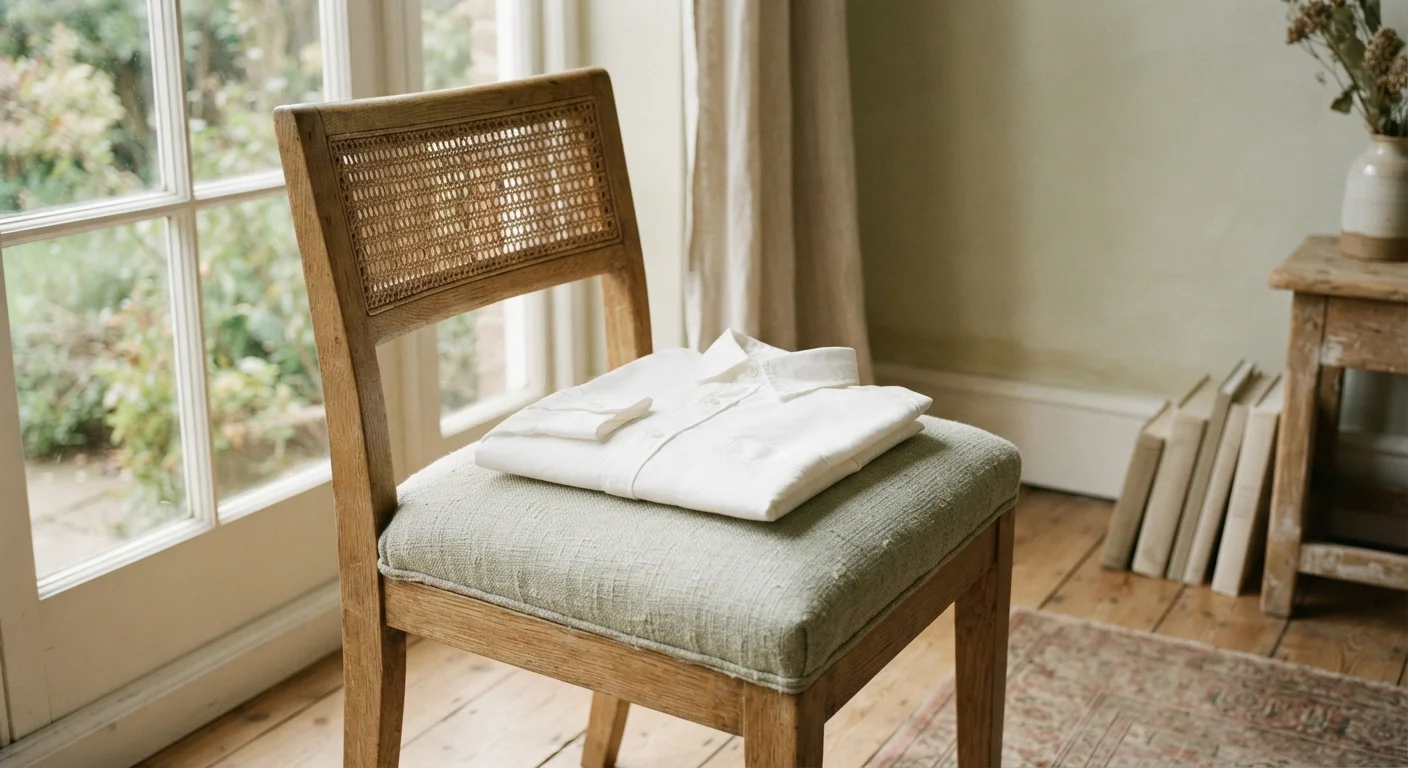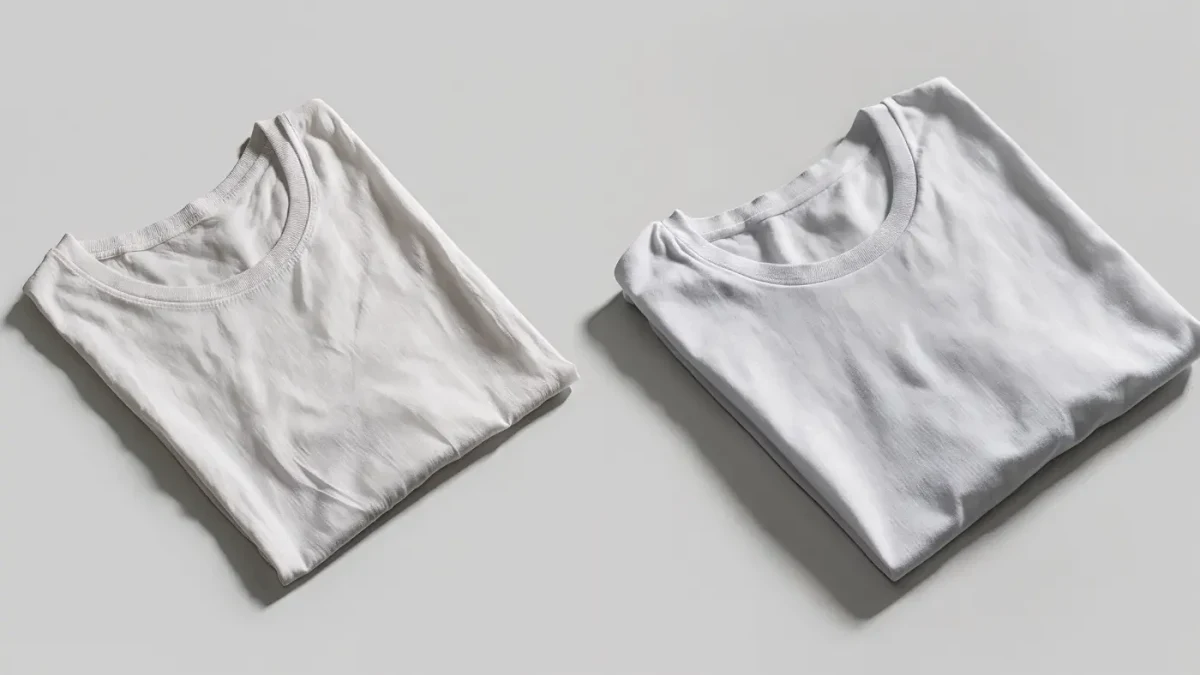
The white shirt earns its legend with range: worn crisp and tucked it passes any boardroom, worn oversized and open it belongs to a Saturday, worn half-buttoned with sleeves rolled it is the entire look. Ten methods below cover those registers and the ones between — each with the fit it demands, because a shirt cut for the boardroom fails the Saturday and vice versa. One purchase rarely does everything; two — one fitted, one oversized — do.
Why does the white shirt fail so often on real people?
Because it shows everything: yellowing, gapping, billowing, and a collar that will not behave. The classic complaints concentrate in three fit points. The shoulder seam must end at the shoulder bone, as on any tailored piece. The chest must close without pull lines between the buttons — gapping at the bust is the most common failure in womenswear and is a cut problem, not a body problem. And the collar band should allow one finger, no more; a loose collar turns every styling method sloppy before the day begins. A shirt that passes those three tests supports all ten techniques below; a shirt that fails none of them can be rescued by none of them.
Which ten ways actually work?
- The French tuck. Tuck only the front placket, leaving the sides and back out. It marks the waist without the formality of a full tuck and forgives a longer shirt. Best with straight or wide trousers and a fitted-to-regular shirt.
- The full tuck with belt. The formal register: crisp front, sleeves to the wrist, one watch. Demands the most fitted shirt and the most pressed collar — the method's authority is the iron's, largely.
- The open layer. Worn unbuttoned over a plain tee or fine knit like a light jacket. Needs the oversized cut; a fitted shirt worn open bunches at the hips. The easiest summer-to-evening tool in the list.
- The knot. Hem knotted at the waist over dresses or high-rise trousers, popularized across the 1990s and again through the 2020s. Works only with longer, roomier cuts; on a fitted shirt the knot sits wrong and adds bulk.
- Sleeves rolled to mid-forearm. Not a full method but a multiplier: rolled sleeves relax every other choice. Roll twice to just below the elbow, keeping the roll flat rather than tapered.
- The backwards shirt. Buttoned at the back, collar open at the nape — a runway trick that migrated to street style through the 2020s. Requires a relaxed cut and a willing audience; best treated as the method of last resort for good reason.
- Under a sweater, collar and cuffs out. The collegiate standard, and the method that hides a shirt's fit flaws best — only collar, cuff and placket show. A slightly too-big shirt becomes an advantage here.
- The off-shoulder layer. Worn slipping off one shoulder over a slip dress or camisole. Deliberately undone, it works best in the oversized cut and in slightly heavier oxford cloth that holds its position.
- The beach tie-front. Two corners of the hem tied at the center over swimwear or a tank — the resort method, needing only length. Crisp cotton matters most here; a wrinkled shirt reads as forgotten rather than chosen.
- The white-on-white column. Shirt over or under white trousers or a white skirt, the tonal method applied to the shirt's home color. Texture does the work: oxford against poplin, cotton against silk.
Which fabric and fit should the purchase be?
Two shirts cover the list. The fitted one: cotton poplin, slim through the chest and waist, sleeve to the wrist bone — it powers methods one, two and seven. The oversized one: cotton oxford or a poplin-linen blend, dropped shoulder, hem past the hip — it powers three, four, six, eight and nine. Poplin's tight weave reads formal and creases visibly; oxford's heavier basket weave reads casual and holds structure, which is why stylists call oxford the more forgiving cloth for anyone buying a first serious white shirt. style coverage.
| Method | Shirt needed | Best pairing |
|---|---|---|
| French tuck | Fitted or regular | Straight trousers, denim |
| Full tuck | Fitted, pressed | Tailoring, a belt |
| Open layer | Oversized | Tee, fine knit |
| Knot | Oversized, long hem | Slip dress, high-rise trousers |
| Under sweater | Any, slightly roomy | Crew or V-neck knit |
| White-on-white | Textured oxford | White trousers, silk accents |
How do you keep a white shirt white?
Wash after every wear, warm where the label allows, with an oxygen-based whitener rather than chlorine bleach — chlorine weakens cotton fibers and yellows them over repeated use, a documented laundering effect that textile conservators also combat in museum textiles. Treat underarm and collar marks before washing, since heat sets them; dry in sun where possible, as ultraviolet light whitens cotton naturally; and retire a shirt to "casual-only" duty the day the yellowing stops responding. In the United States, care instructions are required on most apparel labels under federal rule, so the safe wash temperature is printed on the very shirt in question.
What is the single best white shirt decision?
Buy two, not one — the fitted poplin and the oversized oxford — and the verdict follows: between them, the ten methods above are all available year-round, and the shirt stops being a default and becomes a decision. The classic's reputation was never about the shirt. It was always about the range — and range, like the shirt itself, is best purchased in pairs.
Which mistakes undermine the classic most often?
Three, and all are avoidable. The first is one shirt doing ten jobs: a fitted shirt knotted or an oversized one fully tucked fails at its own method, which is why the two-shirt purchase is the guide's real advice. The second is ignoring the collar — a sagging or overstarched collar defeats every method beneath it, and collar sticks, the small fusible tabs inside the points, cost almost nothing and solve it. The third is proportion blindness: with long, loose layers above or below, the shirt needs a counterweight, a belt, a tuck or a heel, or the whole outfit dissolves into one comfortable blur. The white shirt rewards decisions; it punishes defaults.