A jean's fit is decided by five numbers — front rise, waist, hip, thigh and inseam — and by 2026 the market finally labels them. Straight-leg cuts with a mid rise around 10 to 11 inches have held the top position in US and European assortments since 2023, while wide-leg and barrel shapes pushed leg openings past 20 inches in the 2025 season, per retail trend reporting. This guide translates those measurements into decisions: which rise for which frame, which inseam for which shoe, and why the size on the tag matters less than the tape.
What does rise mean, and why does it decide everything?
Rise is the distance from the crotch seam to the top of the waistband, measured at the front. It determines where the jean visually begins, and therefore the proportion of every garment above it. Low rises near 8 to 9 inches elongate the torso and shorten the leg; high rises of 11 inches or more do the reverse, which is why stylists default to high rise for tucked tops and cropped hems. Mid rise — roughly 9.5 to 10.5 inches — remains the safest volume seller because it splits the difference.
The practical rule: choose rise to balance the top half. A tucked shirt or cropped knit raises the waistline visually, which flatters most frames; a long untucked layer lowers it. Rise cannot be tailored after purchase — the crotch seam is structural — so it is the first number to check, before any other.
Which leg shapes actually exist in 2026?
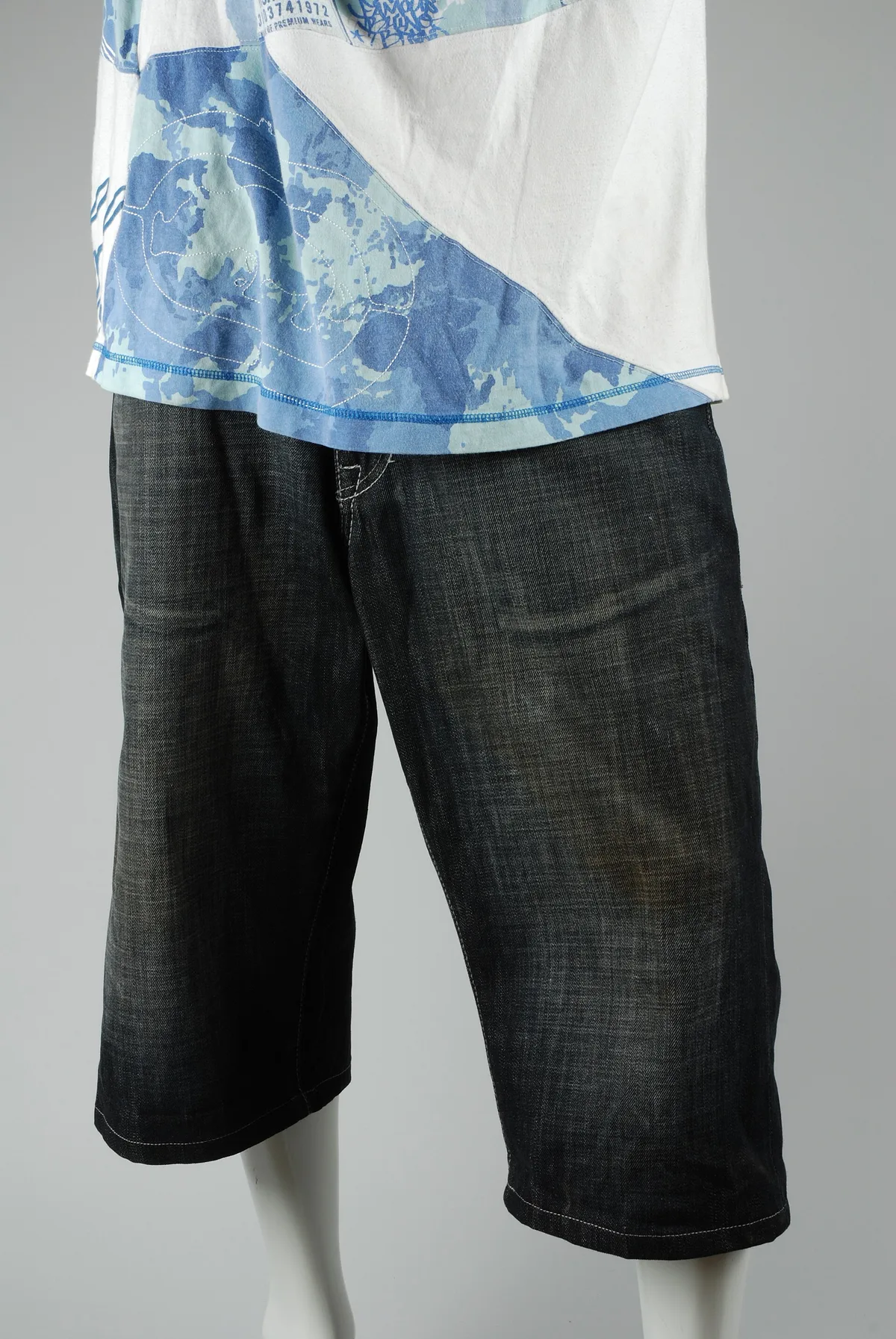
Retailers currently sort denim into six working shapes. The straight leg keeps a constant width from thigh to hem, typically a 16 to 18 inch leg opening. The slim taper narrows below the knee. The wide leg runs parallel at 20 inches or more. The bootcut flares gently from the knee — its revival has been building since 2024. The barrel or curved leg balloons at the thigh and cinches at the hem, the most runway-driven shape of the 2025 season. And the flare, a full bell from the knee down, remains a niche statement.
| Shape | Typical leg opening | Best with | First fit check |
|---|---|---|---|
| Straight | 16-18 in | Sneakers, loafers, boots | Hem skims shoe without stacking |
| Slim taper | 13-15 in | Low-profile shoes | No pulling at the calf |
| Wide leg | 20+ in | Heels, chunky sneakers | Waist sits flat when seated |
| Bootcut | 18-20 in flare | Boots with a heel | Knee room before the flare |
| Barrel | 14-16 in cinched | Sneakers, tailored tops | Volume reads as curve, not slack |
How long should jeans be? The inseam question
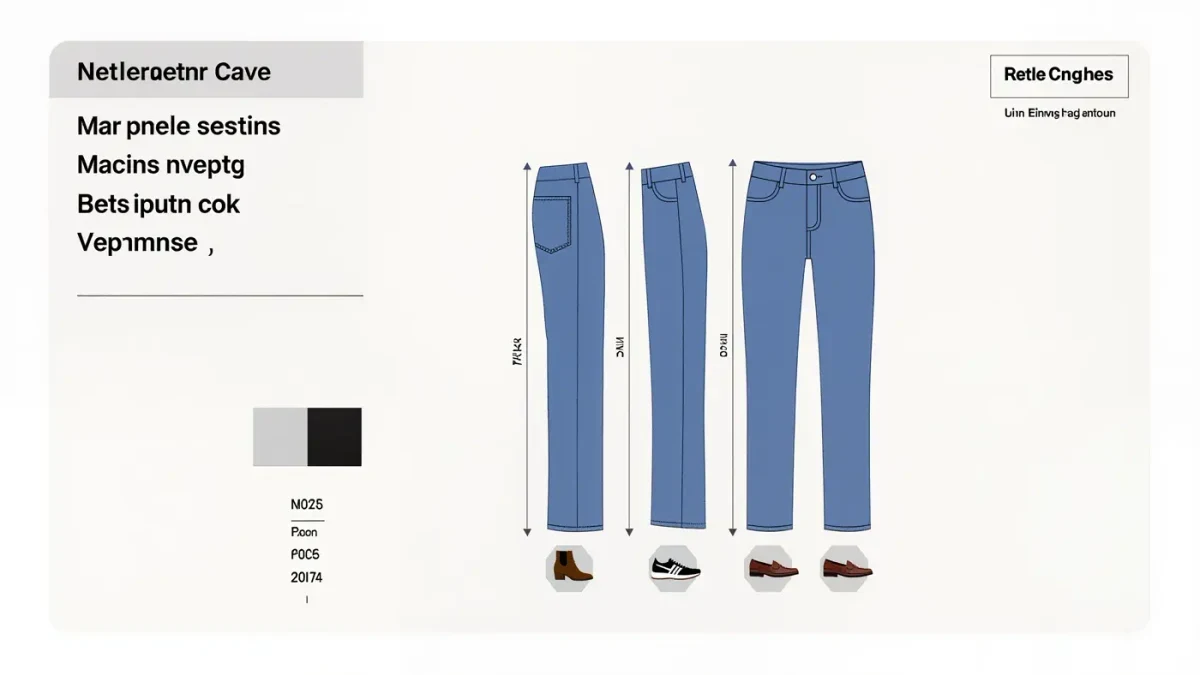
Inseam — the inner-leg measurement from crotch to hem — should be chosen for the shoe, not the bare foot. The working targets: a straight or slim jean ends at the top of the shoe's heel counter, breaking once softly across the laces; a wide-leg jean skims the floor to within half an inch, long enough to hide the shoe's front but not to sweep pavement; a cropped or ankle-length jean, typically a 25 to 27 inch inseam, ends at the narrowest point of the ankle. Stacked fabric at the hem — the bunching that collects above the shoe — signals excess inseam, and hemming costs little while changing everything.
Care rules extend the fit's life, and in the United States they are codified: the FTC's care labeling rule requires most wearing apparel to carry care instructions, and denim's standard advice — cold wash, inside out, sparingly — preserves both the indigo and the fit, since heat and agitation shrink cotton fibers. A jean that fits at purchase can misfit after one hot dryer cycle; air-drying is the cheapest tailoring there is.
Why do sizes vary so much between brands?
Because there is no enforced standard. Vanity sizing and block differences mean a 29 in one brand measures closer to a 31 in another; industry surveys through 2024 documented spreads of up to two inches on nominally identical waist sizes. This is why the tape beats the tag: measure a jean that already fits — waist across the top, front rise, thigh at the widest point, inseam — and compare those numbers to each brand's product page, which by 2026 publishes them almost universally. Two minutes of arithmetic replaces a season of returns.
How should denim fit at the waist and hip?
The two-finger test remains the standard: the waistband should accept two flat fingers at the side seam, snugly but without digging. Below that, the hip is where denim either earns its keep or fails — cotton-rich rigid denim relaxes about half an inch to an inch of stretch within a day of wear, so a new jean should feel firm but not painful through the seat. Stretch blends with 1 to 2 percent elastane relax less and recover more, at the cost of the fade patterns that make rigid cotton age distinctively. A crotch that pulls into a V or a back waist that gaps when seated are both fit failures no wash cycle will fix.
Which fit is the safest first purchase?
The verdict, measured rather than guessed: a mid-to-high rise straight leg in rigid or lightly stretch cotton, hemmed to break once at the shoe, covers more outfits than any other single denim purchase. It balances tucked and untucked tops, works with the three dominant footwear categories, and its proportions survived every trend cycle since the straight leg's 2010s revival. Trends rotate around it; it does not rotate with them.
Can fit be fixed after purchase?
Partly. Hems, tapering below the knee and waistband darts are routine alterations at modest cost. Rising, dropping or widening the thigh is not. So the purchase order stands: rise and thigh first, inseam last — and always check the care label before the mirror moment, because a well-fitted jean is a maintained jean, not a lucky one.
Two wardrobe experiments settle most remaining questions. First, the sit test: jeans must be judged seated, since a waistband that flattens while standing may dig when sitting and a thigh that skims may pull. Second, the shoe audit: try the jean with the three shoes it will actually meet — the sneaker, the boot, the loafer — and note which hem length satisfies all three, or accept that a straight jean hemmed for flats will need a different pair for boots.