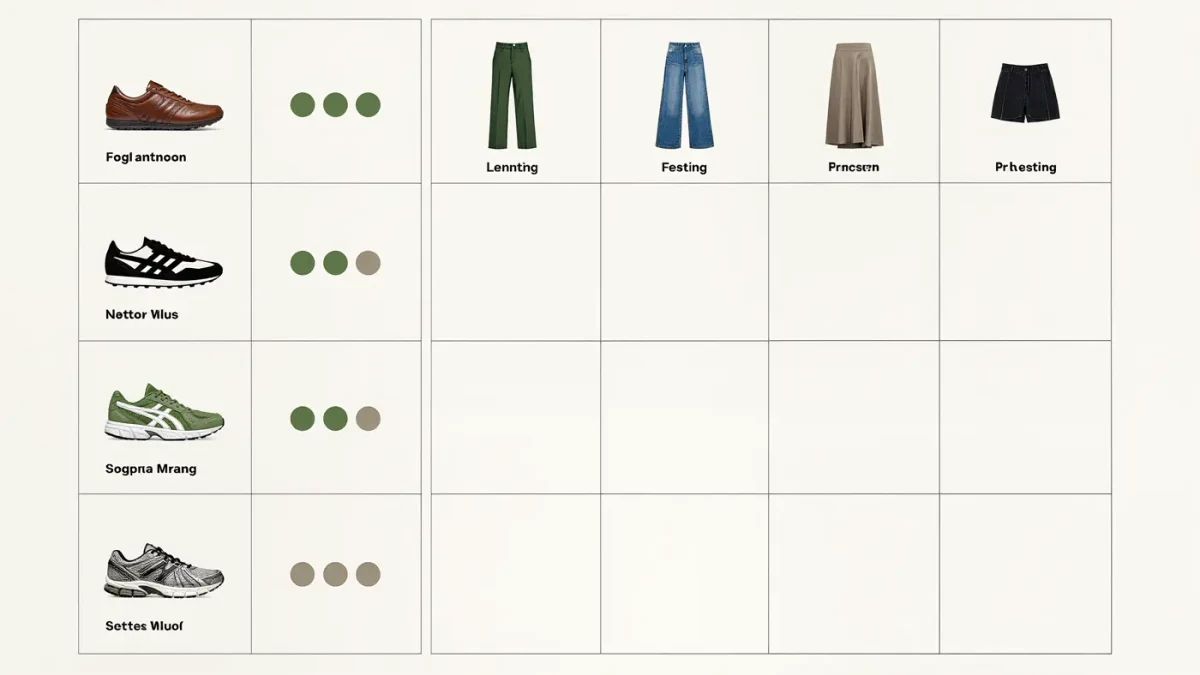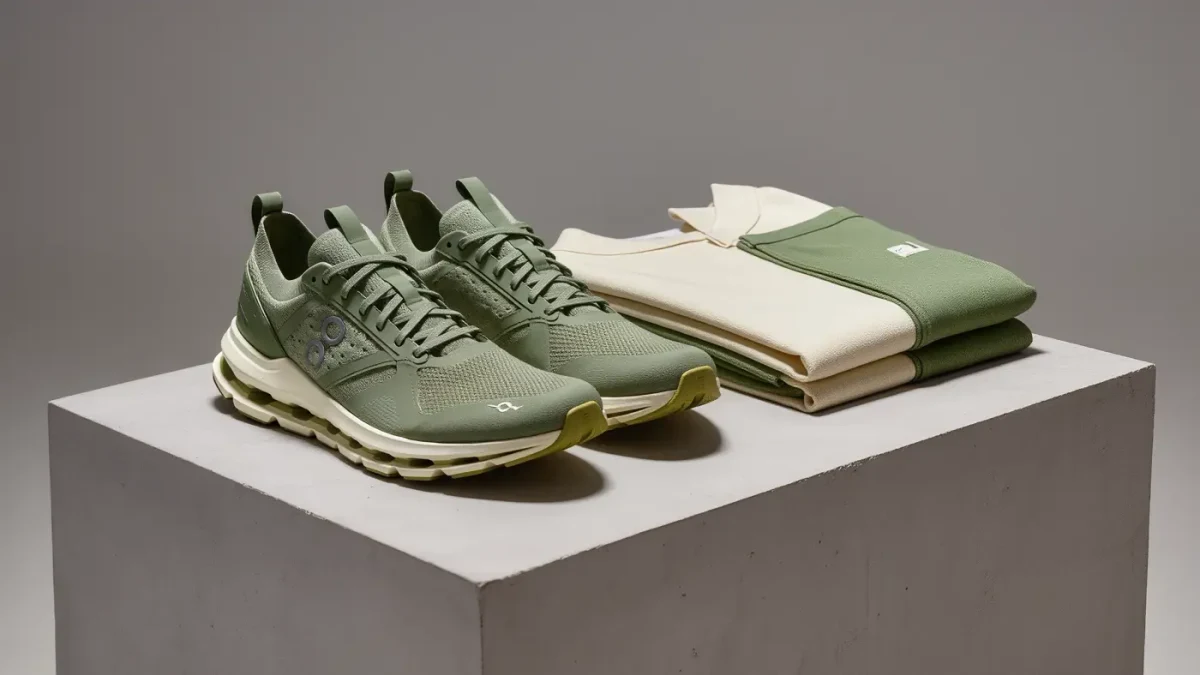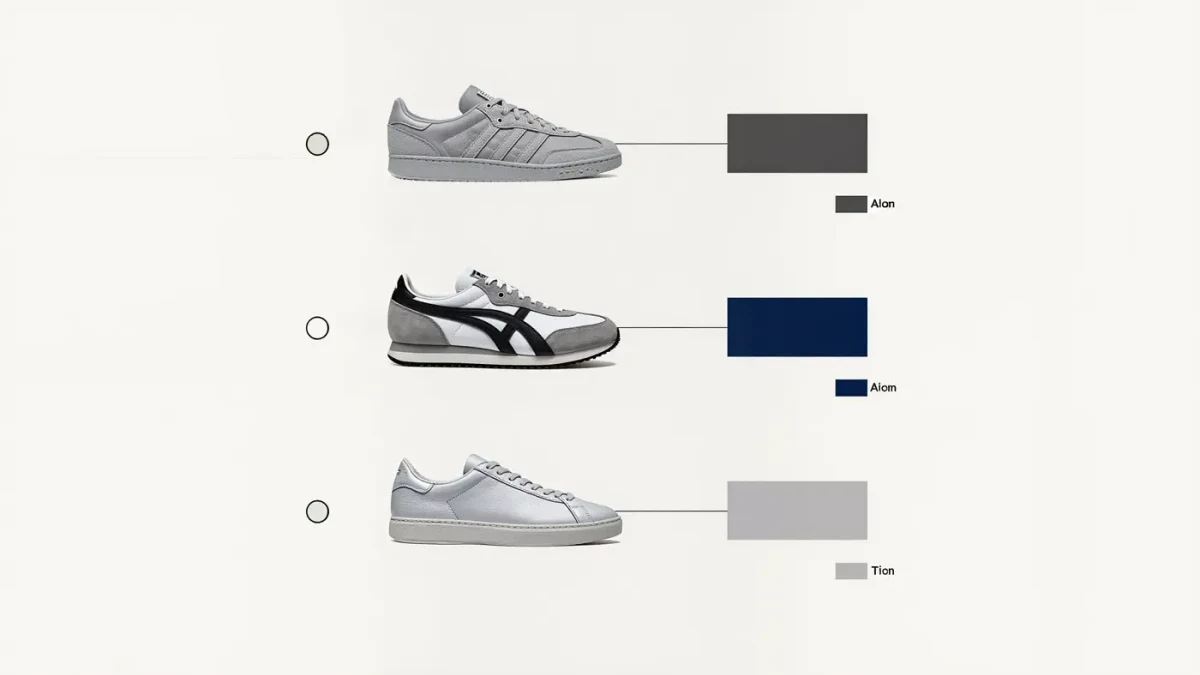
Three sneaker families now cover nearly every pairing decision: the low-profile court sneaker, the slim leather minimal sneaker and the chunky retro runner. Since the early 2020s, when sportswear and tailoring completed their decade-long merger — documented across retail reporting as dress codes loosened through the pandemic years — the question stopped being whether sneakers suit tailoring and became which sneakers suit which tailoring. The answer follows one principle: formality is a spectrum, and the sneaker must sit one notch below the garment, never above it.
Which sneaker works with a suit?
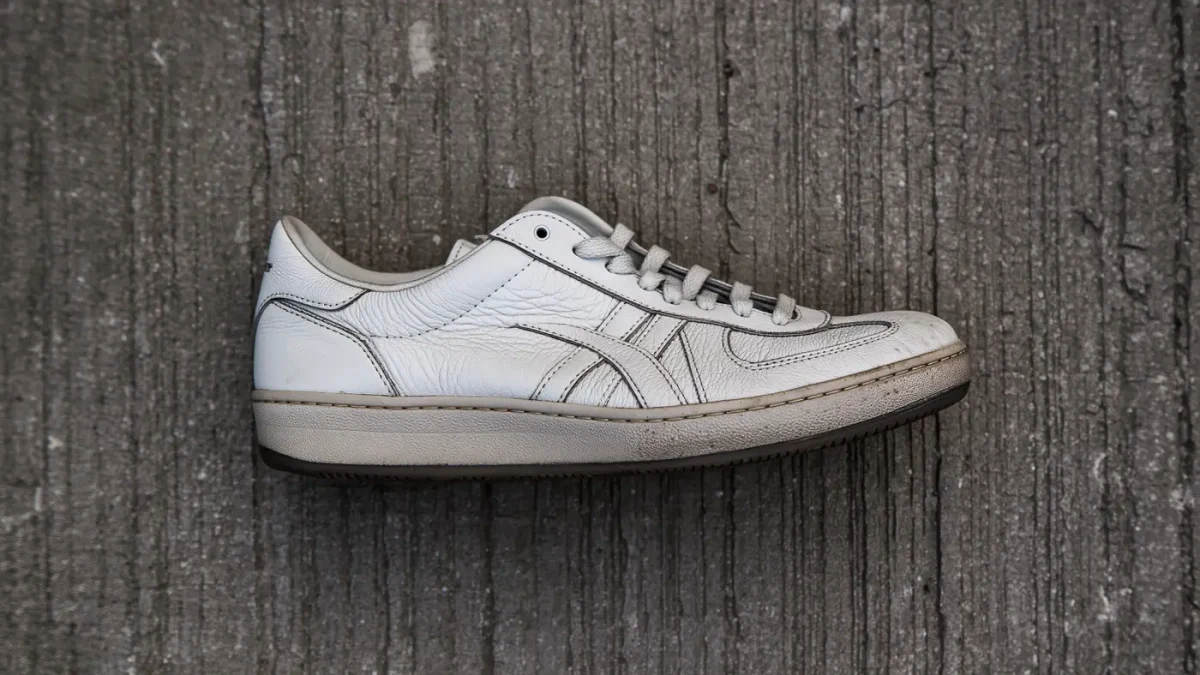
The slim leather minimal sneaker is the safest, followed closely by a clean low-profile court shoe in white or off-white. The logic is silhouette and sole: a slim sole of two centimeters or less keeps the trouser's line honest, while leather uppers read as shoe rather than sport. The suit itself matters as much as the sneaker — softer, unstructured tailoring in cotton or wool blends accepts sneakers far more naturally than sharp worsted business suiting, which still wants a dress shoe. Trouser length is the execution point: the hem should end at or just above the sneaker's collar, showing a sliver of ankle, since a stacked break over a sneaker reads as an accident.
Color discipline finishes the job. White leather is the default because it argues with nothing; off-white and light gray suit earth-toned tailoring; black leather sneakers belong with black or charcoal suits only, where their severity reads as intention.
What about jeans and casual trousers?
Here the court sneaker takes the lead. Its heritage — canvas and leather court shoes designed for tennis and basketball through the twentieth century — sits naturally beside denim, chinos and fatigue trousers, and its slightly wider silhouette balances heavier denim weights. The retro runner, meanwhile, is the casual category's natural resident: chunky midsoles of three centimeters or more pair with wide and straight jeans, where the volume above answers the volume below. The recurring error is proportion mismatch in the other direction — a bulky runner beneath a slim tapered jean makes both look smaller; runners want roomier hems.
Sock choice, a small detail most wearers ignore, settles these outfits: with cropped or ankle-length trousers, the no-show sock keeps the line clean; with wider hems, the sock disappears entirely and the question stops mattering altogether. Visible socks under tailoring remain the rare outright error in this territory.
Can sneakers work with evening or occasion wear?
Selectively, and only upward. A slim black leather sneaker with a black suit or a monochrome evening look has been accepted practice since the 2010s runways normalized it, but the formula is strict: the sneaker must be pristine, the trousers must finish at the collar, and the rest of the outfit must carry the formality the shoe declines. Velvet or satin-finish sneakers blur the line further and suit dinner settings better than canvas ever will — canvas, whatever its charms, stays a daylight material. The test is venue: evening events at offices, galleries and restaurants accept the slim leather sneaker; ceremonies and formal dinners still do not.
How does hem length decide the pairing?
The hem is the joint between trouser and sneaker, and each combination has a target. Full-length straight trousers should break once on the sneaker's tongue. Cropped or ankle-length hems — the dominant cut since the mid-2010s — should end at the collar bone of the shoe, showing sockless ankle or a no-show sock. Wide-leg trousers need length: a hem that grazes the floor with half a centimeter of coverage, since any shoe beneath a floating wide hem looks disconnected. And stacked bunching, the pooled fabric above the shoe, flatters nothing with any sneaker — it is the single most fixable flaw, resolved by a tailor's hem for a modest fee.
| Sneaker family | Sole height | Best with | Avoid with |
|---|---|---|---|
| Slim leather minimal | ~2 cm | Suits, evening looks, cropped hems | Bulky runners' silhouette competition |
| Low-profile court | 2-3 cm | Denim, chinos, casual tailoring | Sharp worsted business suits |
| Chunky retro runner | 3+ cm | Wide jeans, relaxed layers | Slim taper, formal suiting |
How should sneakers be maintained to stay outfit-worthy?
By rotation and by leather care. One pair worn daily degrades in months; three pairs rotated last years, since midsole foam recovers between wears. Leather uppers accept a wipe-down and a white cream polish; canvas survives gentle machine washing at low temperature in a garment bag; and midsoles — the part that dates a sneaker fastest — respond to a soft brush and mild detergent. The line between "styled" and "worn-out" is narrow: creased leather reads as character, yellowed midsoles and frayed laces read as neglect. Laces cost almost nothing and refresh the whole shoe; a five-minute weekly wipe-down across the rotation protects an outlay that easily exceeds the cost of the tailoring it complements.
What is the one sneaker purchase that covers everything?
The verdict after three families and every hem length: a white or off-white slim leather sneaker with a sole under three centimeters pairs with more of a working wardrobe than any other single shoe — suits it handles carefully, denim it handles completely, and evening wear it handles on the strict terms above. Buy the second pair — the court sneaker — when casual life demands it. Buy the runner only when the hems — and the habit of hem discipline — are ready for it.
How do seasonal factors change the pairing?
Twice a year, materially. Summer favors canvas and mesh uppers, which is precisely when formality ceilings drop — canvas runners with linen tailoring are a June default across European cities, accepted everywhere except evening events. Winter complicates the opposite way: salt, slush and gray slush-light punish white leather, so deeper tones take over from November through March, and the chunky runner gains its annual justification beneath heavier coat silhouettes. The rotation mirrors the wardrobe's own — light pairs for light months, dark pairs for dark — and a sneaker wardrobe of two, one white pair for warm seasons and one dark pair for cold, covers the year without repetition, and without ever sending white leather out into February's salt.