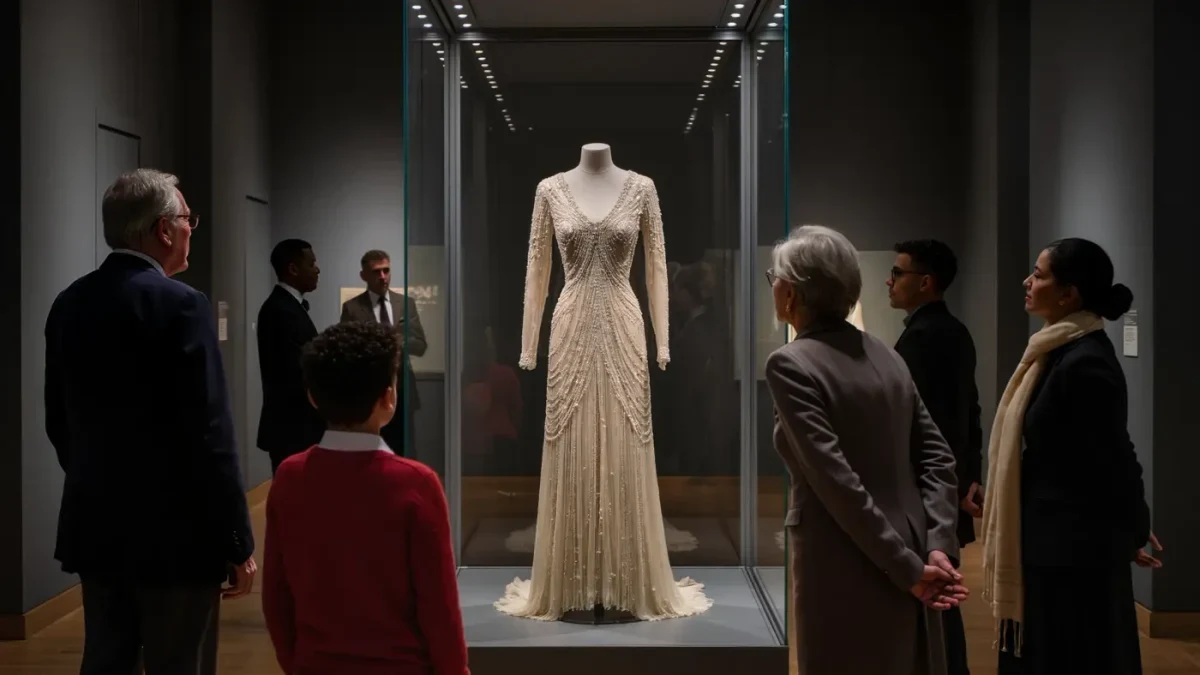
The Costume Institute changed museum fashion by refusing to treat clothes as decoration. Founded in 1937 as an independent Museum of Costume Art and merged into the Metropolitan Museum of Art in 1946, it grew into a collection of roughly 33,000 objects spanning seven centuries — and its 2015 exhibition "China: Through the Looking Glass" drew about 816,000 visitors, among the Met's most-attended costume shows ever. A garment, the numbers said, could headline a museum.
Why was fashion kept out of museums for so long?
Because fine-art institutions ranked media by permanence. Painting and sculpture were judged to outlast textiles, and textiles were assumed to be craft rather than art. The Museum of Costume Art was created in the 1930s precisely to counter that hierarchy, backed by figures such as Aline Bernstein and Dorothy Shaver, who argued that dress documented social history no canvas could. When the museum merged with the Metropolitan in 1946, fashion entered the building — though it would take decades to enter the conversation.
The early decades were scholarly and quiet: garments were conserved, catalogued and shown in cases organized by period. Respectable, invisible. What changed the Institute's position was a change in presentation philosophy, and it arrived with Diana Vreeland.
What did Diana Vreeland actually change?
Vreeland, the former editor who became the Institute's special consultant in 1972 and stayed until 1987, treated exhibitions as theater. Her shows — "The Glory of Russian Costume" in 1976, "Costumes of Royal India" in 1985 — paired garments with elaborate setpieces, light, music and narrative rather than neutral chronology. Critics sometimes objected to the spectacle, but attendance rose and the press followed. The lesson was durable: audiences come to fashion exhibitions for world-building as much as for objects, and a museum that stages a garment's context earns a public that a vitrine never attracts.
Vreeland also normalized the loan of living designers' work and the collaboration of contemporary couture houses with conservation teams, tying the museum directly to the industry it studied. That relationship became permanent infrastructure after her tenure.
Which exhibition proved fashion could outdraw art?
"China: Through the Looking Glass" in 2015, curated by Andrew Bolton, is the cleanest proof point: roughly 816,000 visitors made it the most-visited costume exhibition in the Met's history and one of the museum's top ten shows of all time. "Camp: Notes on Fashion" in 2019 sustained the momentum with strong attendance and, more importantly, a full takeover of popular discourse — the first Monday in May had become a global media event in its own right.
The Anna Wintour Costume Center, opened in 2014 as a purpose-built wing for galleries and study storage, gave the department architectural permanence to match. A once-marginal collection now occupied prime real estate on Fifth Avenue.
| Era | Curatorial logic | Result |
|---|---|---|
| 1946–1972 | Chronological conservation and display | Scholarly respect, small audiences |
| 1972–1987 (Vreeland) | Theatrical narrative and spectacle | Attendance and press attention |
| 1988–2014 | Thematic scholarship (Koda, Martin) | Critical legitimacy |
| 2014–present | Blockbuster themes plus a permanent wing | Attendance above 800,000 for flagship shows |
How does the Met Gala fit into the mission?
The Gala predates Vreeland — it began as the "Party of the Year" fundraiser in 1948 — but her era recast it as the exhibition's opening ceremony, and the pairing has been the model since. Each year's theme announces the spring show, the guest list concentrates the industry's attention, and the proceeds fund the Institute's operating budget. The effect is circular and deliberate: celebrity attention finances scholarship, and scholarship lends the celebrity event its cultural cover. Few fundraising mechanisms in museum practice are so efficiently fused with programming.
What happens to the garments themselves?
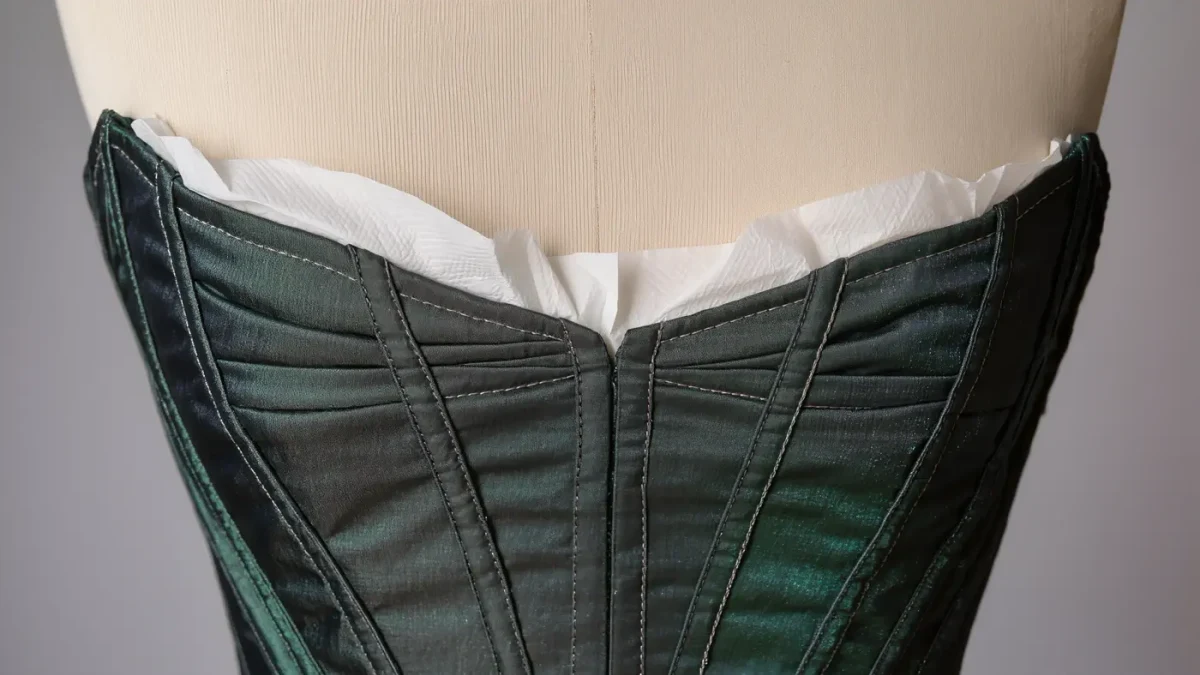
Conservation is the unglamorous half of the story. Historical pieces are stored flat or on custom forms in climate-controlled rooms; many cannot be shown for long stretches because light degrades dye and fiber. Mannequins are made to measure for each garment, a process that can take longer than the exhibition design itself. This is why most of the collection — thousands of pieces from the 15th century onward — is accessible mainly to researchers rather than permanent galleries, and why temporary exhibitions rotate so carefully.
Institutions across the United States maintain comparable holdings; the Smithsonian's costume and textiles collections are the other anchor of American dress scholarship, and researchers routinely move between the two. The field's infrastructure, in other words, is now permanent — a sharp contrast with the 1930s, when fashion's museum future hung on a small group of advocates.
Did the model stay in New York?
It did not. The Vreeland-Bolton playbook — a strong theme, a celebrity engine, immersive staging — is now the international template. London's Victoria and Albert Museum built its own blockbuster practice around fashion retrospectives of living designers, Parisian institutions followed with monographic shows devoted to couture archives, and mid-sized museums discovered that a costume show reliably brings younger, first-time visitors through the door. Touring exhibitions moved the same garments through multiple cities, spreading both the cost and the audience across institutions that could never fund the loans alone.
The economics reinforced the aesthetics. Fashion exhibitions travel well because garments are compact, loans are tightly controlled, and the subject photographs magnificently — every visitor with a phone becomes unpaid marketing. Meanwhile, universities added curatorial programs focused on dress, producing a professional class that treats a garment mount or a fiber analysis as serious work. What began as one department's argument inside a single museum is now a career path, a conference circuit and a steady publishing field. That institutional spread may be the Institute's most consequential export: it normalized the idea, everywhere at once, that the history of clothing deserves the same staffing, funding and rigor as the history of anything else on the gallery wall.
Why does any of this matter to how we dress?
Because museums confer status, and status flows back to the runway. When a house's archive enters a museum collection, its designs acquire historical standing that marketing cannot buy; when an exhibition contextualizes, say, tailoring or minimalism as a lineage rather than a trend, consumers read current clothing differently. The Costume Institute's deeper achievement is interpretive: it taught the public that a dress is a document — of economics, technology, gender and power — and once that reading is learned, it applies to every wardrobe. The verdict, nearly nine decades in: the museum did not just exhibit fashion. It promoted it to primary evidence.