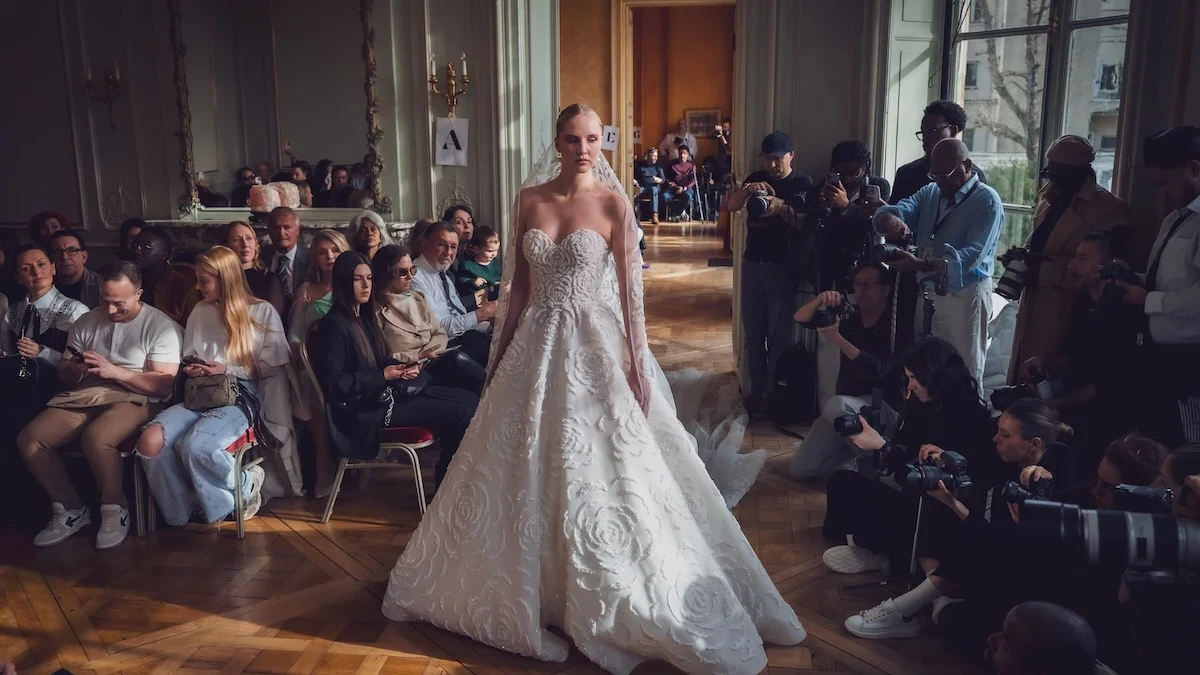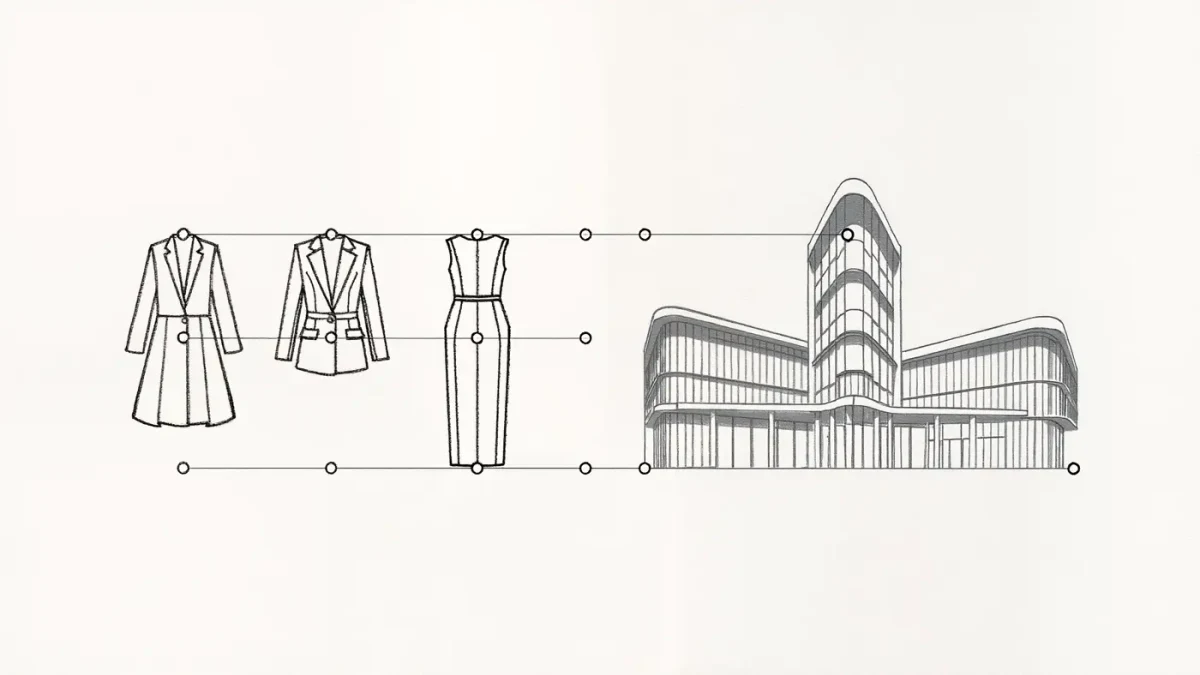
Fashion and architecture share lines because they share the same problem — enclosing a body in space with structure, proportion and intention. Gabrielle Chanel made the kinship explicit, calling fashion "architecture" and reducing it to "a matter of proportions," and the 20th century kept proving her right: Charles James constructed ball gowns the way engineers build cantilevers, Cristóbal Balenciaga was described by disciples as an architect in fabric, and by the 2000s the borrowing ran in both directions, with Rem Koolhaas building stores for Prada and Tadao Ando building a theater for Armani. The disciplines did not meet. They converge.
Where did the shared language begin?
In modernism's shared rebellion. The early 20th century stripped ornament from both disciplines at once: architects found the load-bearing frame and discarded decoration, while couturiers loosened corsets and discarded the decorative silhouette. The logic was identical — let structure, not ornament, carry meaning. designers like Madeleine Vionnet cut garments on the bias so fabric draped by physics rather than scaffolding, an engineering act in cloth; Sonia Delaunay carried the geometry of modern painting into simultaneous dress and interiors; the Bauhaus taught that a chair and a garment obeyed the same constructive principles. When Chanel cut her suit from jersey — a fabric borrowed from menswear undergarments — she was doing the architectural thing: exposing structure and calling it beauty.
How do the flagship buildings fit in?
As the century's clearest collaboration. Prada commissioned OMA, Rem Koolhaas's firm, to build its New York "Epicenter" in SoHo in 2001 and a Los Angeles follow-up in 2004 — stores conceived as architecture about display, with waving wooden floors and programmable surfaces — while Herzog & de Meuron delivered the Prada Aoyama building in Tokyo in 2003, a glass lattice of horizontal diamond planes. Giorgio Armani went further, opening the Armani Teatro in Milan in 2001, designed with Tadao Ando, as a combined runway, office and archive campus. In 2008 Zaha Hadid's sweeping pavilion for Chanel's traveling "Mobile Art" exhibition toured the world's capitals, a handbag-inspired building designed by architecture's most kinetic practitioner. Fashion had become a client of architecture's greatest offices — and architecture had discovered that clothing showrooms paid for the radical space museums would not.
| Collaboration | Architect | Year |
|---|---|---|
| Prada Epicenter, New York | OMA / Rem Koolhaas | 2001 |
| Prada Aoyama, Tokyo | Herzog & de Meuron | 2003 |
| Armani Teatro, Milan | Tadao Ando | 2001 |
| Chanel Mobile Art pavilion | Zaha Hadid | 2008 |
Why do architects make convincing designers?
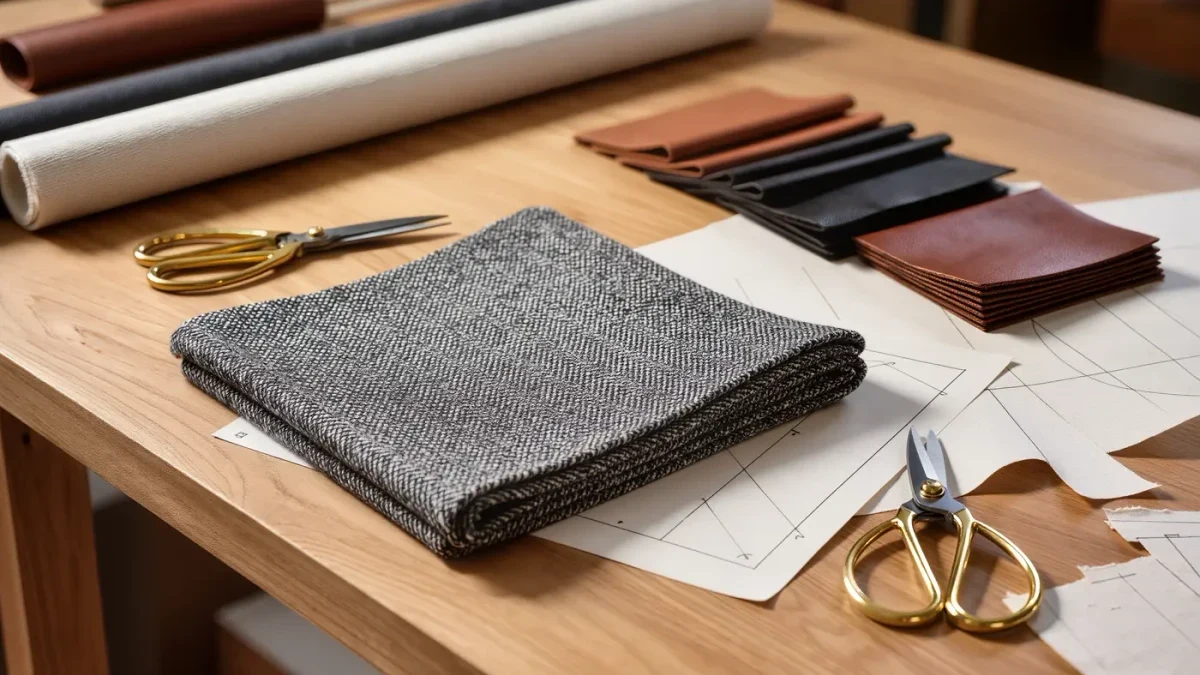
Because the training transfers. Virgil Abloh, who held a civil engineering degree and a master's degree in architecture from the Illinois Institute of Technology before taking over Louis Vuitton menswear, treated garments as structures — iron grids, exposed seams, quotation marks around function — and carried architecture's discourse into the most-watched menswear seat in fashion. His path is the rule's most famous instance, not its exception: cutting, draping and proportion are spatial reasoning, and the ateliers have always quietly recruited minds shaped by plans and models. When a designer says a jacket is "constructed," the vocabulary is not metaphor. Pattern-making is drawing in three dimensions, graded to the human body instead of the human scale.
Which shared principles show up in the clothes themselves?
Four, reliably. Proportion — the golden-ratio placement of a waistline or a window, the reason a jacket's pocket line can be a centimeter off and read wrong. Structure made visible — the exposed seam that parallels the exposed beam, both arguing that honesty in construction is its own aesthetic. Economy of material — Vionnet's bias cutting wasted nothing and needed no interfacing, the same virtue modernists celebrated in a load-bearing wall. And modularity — the architectural grid reborn as the mix-and-match wardrobe, pieces designed to combine like components rather than exist as unique compositions. Test any garment praised as architectural and at least one of the four will explain it. The vocabulary repeats because the problem repeats: both disciplines assemble flat material into functional form around a living body, and both discovered, century by century, that the solutions converge on the same proportional rules whether the material is stone, steel or cloth.
What does architecture borrow back?
Softness, principally. Fashion's research into drape, pleating and tension has informed tensile structures and textile facades — buildings now wear woven skins engineered the way Fortuny engineered his pleats a century ago, set by heat and holding their shape permanently. Runway scenography feeds the other direction: fashion week sets are, functionally, temporary architecture, and the discipline's temporary-pavilion culture has drawn directly on fashion's fluency in atmosphere, lighting and the choreography of an audience. The exchange works because the underlying skill is shared: both fields compose space, movement and surface for a body passing through.
Why does the pairing keep selling?
Because both products are worn as identity, and the crossover audience is the same affluent design-literate buyer. Stores designed by Pritzker Prize architects perform as destinations; a garment described as architectural performs as an investment; museums stage joint exhibitions where a Charles James gown and a model of a Corbusian villa share a room and argue the same thesis. Retail discovered the commercial truth early — the showroom designed by a famous architect converts the store's ceiling into the brand's — and the formula has been standard practice in luxury flagships ever since.
How do museums stage the crossover?
As the disciplines' joint archive. Design institutions increasingly hang garments beside chairs, models and drawings from the same era, and the juxtaposition reads less like a stunt than a correction — a Charles James gown displayed near mid-century furniture demonstrates that both objects answered the same postwar questions about structure and spectacle. Retrospectives of architects now include the uniforms they wore and the fashion collaborations they kept; retrospectives of designers increasingly credit the draftsmanship of pattern-makers alongside the sketches. Scholarship followed the display strategy: design history programs treat the garment and the building as parallel primary sources, and collections open to researchers hold both under one roof. The staging matters because visibility shapes practice. A generation of designers who first encountered modernism through museum pairings now commissions the buildings, and a generation of architects raised on fashion's pavilions dresses the way they build. The museum, as ever, is where the disciplines admit what they owe each other.
Is the conversation between them finished?
Entering a new phase. Sustainability has made both disciplines confront waste — fashion's deadstock and architecture's demolition — and the shared answer looks alike: durability, adaptability, material honesty, buildings and garments designed for repair rather than replacement. Digital tools complete the loop, with 3D modeling and fabrication now native to both ateliers and architecture offices. The verdict, after a century of mutual borrowing: fashion is architecture at the scale of the body, and architecture is fashion at the scale of the city — same lines, same logic, different hemlines.