A host city earns from fashion week through an intensive nine-day spike of hotel occupancy, restaurant traffic, venue rental and event production — and New York has actually measured it. A New York City Economic Development Corporation study put the event's annual economic impact at roughly 532 million dollars, a figure that comfortably exceeded estimates for hosting a Super Bowl and made the twice-yearly runway calendar a small industry in its own right. The shows are the spectacle; the invoice is the economy underneath.
Where does the money actually go?
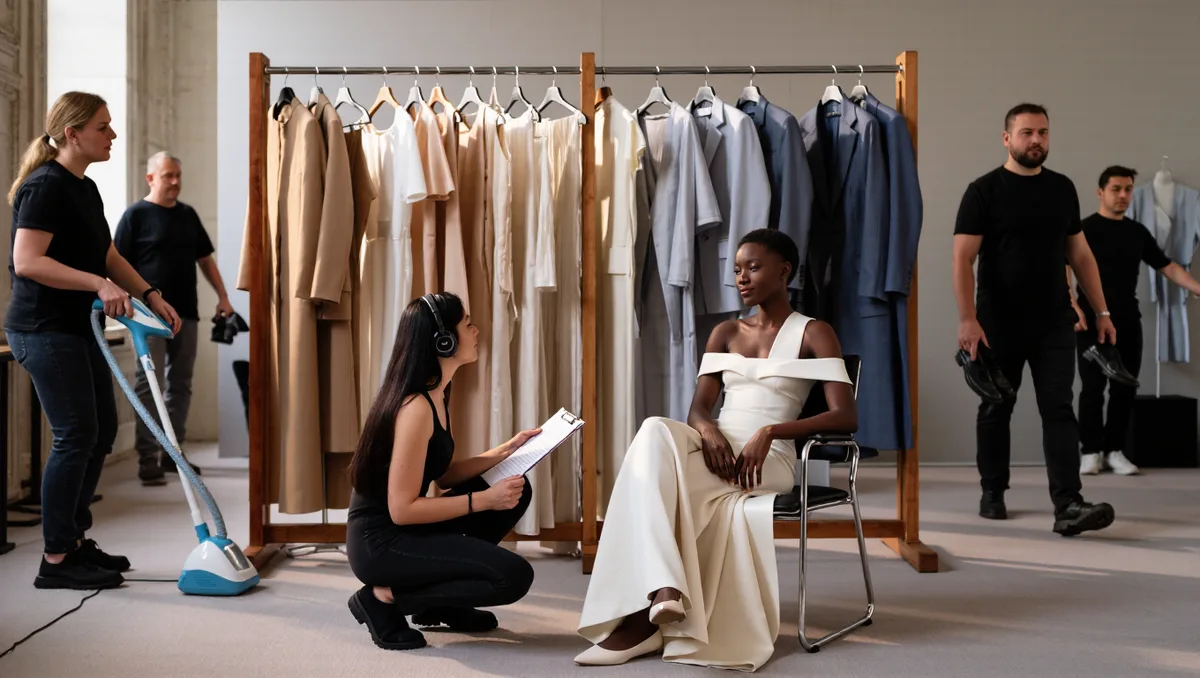
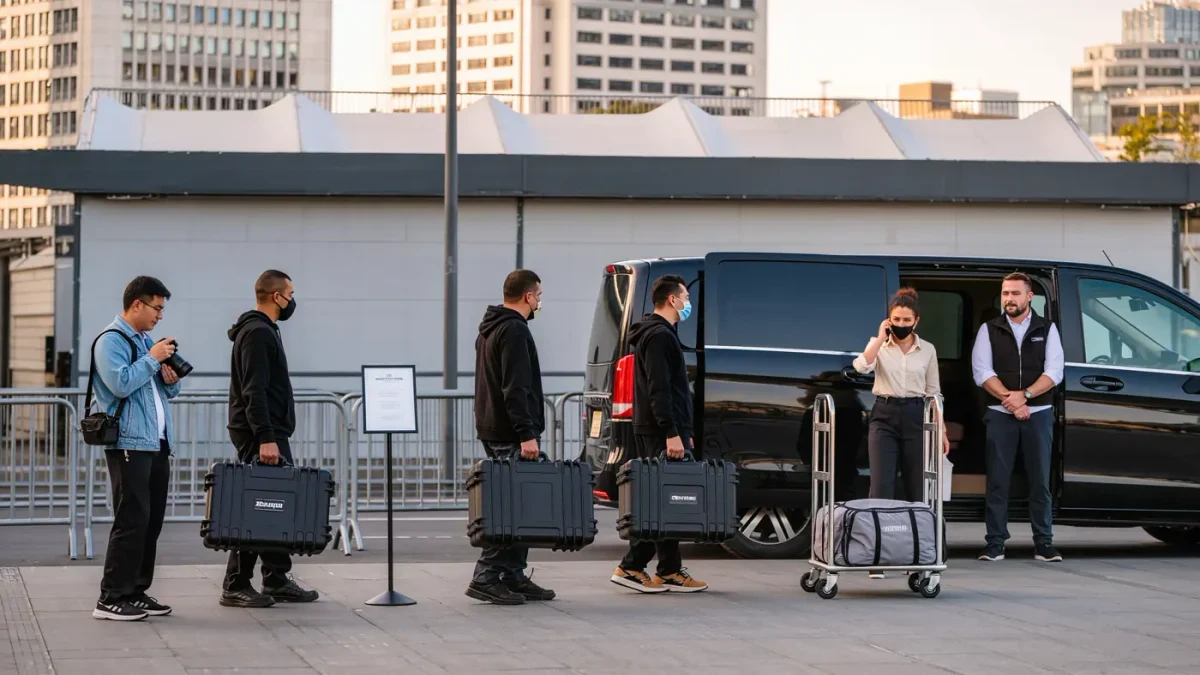
Into services, not glamour. A single major show contracts lighting and sound crews, set builders, seamstresses, security, catering, drivers and casting agencies; a season concentrates hundreds of such productions into nine days. Around them spins the hospitality layer — hotel rooms booked blocks at a time, restaurants in show districts running their best weeks of February and September, car services running point-to-point loops between venues. The freelance labor market is the quiet beneficiary: stylists, makeup artists, hair assistants and production coordinators earn a disproportionate share of their annual income during the fashion weeks of the four capitals. None of this appears on a runway, but all of it appears in the city's tax receipts.
How does the fashion week figure compare to other mega-events?
Strikingly well, considering it happens twice a year. When analysts put the roughly 532-million-dollar New York figure beside the estimated 300-to-400-million-dollar impact of hosting a Super Bowl, the comparison that circulated widely was that fashion week out-earns the championship game — and unlike the game, it recurs without a stadium bid. The advantage is structural: fashion week uses existing venues, requires no public infrastructure spending, and disperses its spending across neighborhoods rather than concentrating it in one district. London, Milan and Paris run equivalent, if harder-to-isolate, calculations; the British Fashion Council has long valued the wider UK fashion industry's contribution to the economy in the tens of billions of pounds, with the week itself as its shop window.
| Beneficiary | How fashion week pays |
|---|---|
| Hotels and restaurants | Nine-day occupancy spike in show districts |
| Production freelancers | Concentrated season income for crews and artists |
| Venue and event firms | Rental, rigging, security across hundreds of shows |
| City coffers | Tax receipts from hospitality and services |
Who pays to be on the calendar?
The brands, heavily. A runway show at a major house is routinely estimated to cost into the millions — venue, scenography, casting, travel for editors and buyers — with no direct revenue attached, which makes fashion week one of the few marketing events where the performer pays the city rather than the reverse. Official federations collect listing fees and the venues charge accordingly, but the deeper transaction is reputational: presence on the calendar is the price of being considered a working global house. This inverted economics explains the perennial drama of calendar politics — who shows, who skips, who converts to digital — because every exit or entry moves real money between cities.
What does the buyer economy get for its travel?
Orders, and the week exists for them as much as for the coverage. Multi-brand store buyers fly between the four capitals writing the season's orders on the spot — negotiating delivery windows, minimums and markdown allowances that determine what actually reaches shop floors in six months' time. The concentration matters commercially: a buyer can see forty collections in five days, cross-reference trends before committing budgets, and reallocate spend between houses midweek based on what the studios actually delivered. Retail economics ride on these few days, because the order book written during fashion week becomes the inventory story of the following season. Cities understand this too — the buyers' hotels, dinners and car services are among the week's highest-yield spending, quieter than the front row but steadier. When a house skips a season, the loudest complaint rarely comes from the press; it comes from the accounts that planned their travel and their open-to-buy budgets around a collection that did not walk.
Do the digital shows change the economics?
They trimmed the travel budget, little else. When houses streamed shows and mailed lookbooks, the cheapest season in decades ran its course — and the hospitality economy of fashion week visibly contracted in the districts that depend on it. Yet the physical event returned intact, because the travel is not overhead; it is the product. Buyers writing orders, editors setting context and stylists sourcing pulls all depend on concentration in one city for one week. The lesson cities drew was reassuring: fashion week's value is the co-location, which no livestream has replicated, and the spending follows the co-location.
What does a host city give back?
Permits, policing and patience, mostly at modest direct cost. Fashion weeks run on existing venues — studios, museums, garages, gardens — so municipal spending is largely logistical: street closures for arrivals, security coordination, sanitation around the show districts. Cities justify it easily against the measured receipts, and some compete actively, with federations and city agencies jointly courting houses for destination shows that export the economic spike to new locations. The negotiation is quiet but constant, because the calendar's geography is effectively a map of which city offered the best combination of symbolism, infrastructure and indifference to disruption.
How do smaller designers survive the economics?
By inventing cheaper formats, some of which became permanent. Younger houses pioneered presentations instead of runways — static models, repeated time slots, a fraction of the production cost — and federations now run official slots and prize schemes that subsidize emerging talent's calendar presence, covering venues and production for designers the format would otherwise price out. Showrooms, shared with neighboring labels, replace expensive standalone spaces, and appointments with buyers happen across the week without a staged event at all. The mathematics are unforgiving: a presentation might cost a tenth of a runway show, and a showroom week less again, so the emerging economy of fashion week is a lattice of scaled formats arranged by budget. Critics once read the downgrade as absence of ambition; the industry now reads it as literacy. The houses that master the small formats first are, historically, the ones that can afford the large ones later — and several of today's headline shows were built on exactly that ladder.
Is the fashion week economy threatened?
By consolidation, not by extinction. Fewer, larger houses means fewer extravagant shows; cost-cutting has trimmed guest lists and shortened weeks at the margins; and the industry's sustainability scrutiny puts pressure on the most carbon-intensive productions. But the fundamentals hold — the week still concentrates the industry's transactions, and the city still collects. The verdict, sixty years after the modern format settled: fashion week is not a party with an agenda. It is a convention with better lighting, and cities do the math accordingly.