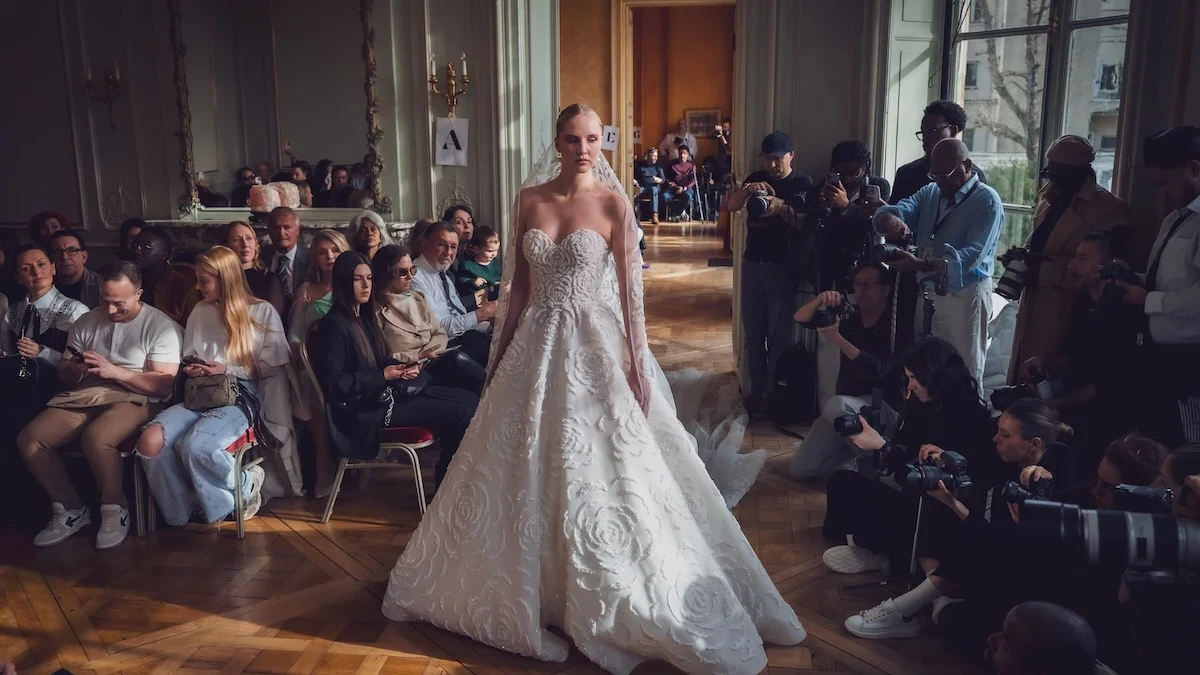
Fashion weeks happen where they happen because each city's calendar is a negotiation between a governing body, a real estate market and a brand narrative — and Paris is the clearest case. The official womenswear calendar set by the Fédération de la Haute Couture et de la Mode regularly lists more than thirty runway shows per season, and their venues tell the city's story: Chanel staged shows for years in the Grand Palais's glass nave, Dior favors the Cour Carrée of the Louvre, and the gardens of the Tuileries remain the busiest runway district in fashion. The venue, in short, is never neutral.
What does the official calendar actually control?
Less than most people assume. The federation fixes dates, admissions and the order of shows on the official calendar, but it does not dictate venues. Houses book their own spaces, and that freedom is where geography becomes strategy. A show opposite the Eiffel Tower from the Trocadéro esplanade borrows a national monument as a backdrop at zero production cost; a show inside the Rodin Museum trades monumentality for intimacy. Because invitations, seating and camera positions must all be built around the site, venue choice effectively determines who the show is for: editors and buyers in a compact box, or a global audience watching drone footage of a landmark.
This is why venue scouting has become a discipline of its own, with specialized production agencies holding relationships with Paris's museums, palaces and municipal spaces years in advance.
How did the Grand Palais become fashion's stage?
The Grand Palais, built for the 1900 Universal Exhibition, offered something no studio could: a 45-meter-high glass vault in central Paris. Chanel began using it for runway shows in 2005 and turned it into the most recognizable set in the industry — a supermarket in 2014, a brasserie in 2015, a rocket in 2017, all under Karl Lagerfeld. After a five-year renovation closed the building, its 2024 reopening returned it to the calendar immediately, a reminder that fashion had become one of the landmark's anchor tenants. The pattern matters because it shows venues accumulating brand meaning over decades: the address itself becomes part of a house's iconography, which is exactly why houses fight to return to the same sites each season.
Do the other capitals follow a different logic?
Different, and readable. New York Fashion Week clusters in private studios — Spring Studios in Tribeca and the Starrett-Lehigh Building on the West Side became successive default addresses — because the American calendar prizes efficiency, with dozens of shows compressed into a tight route. Milan splits between houses' own headquarters and grand sites like Fondazione Prada, keeping fashion close to its manufacturers. London rotates through cultural landmarks and temporary show spaces, reflecting a younger, scrappier market. Each model encodes an economy: Paris sells heritage, Milan sells industry, New York sells commerce, London sells discovery.
| City | Typical venue logic | Message |
|---|---|---|
| Paris | Monuments and museum courtyards | Heritage and scale |
| Milan | Brand headquarters and industrial campuses | Craft and manufacturing |
| New York | Private studios clustered downtown | Commercial efficiency |
| London | Rotating cultural sites | Newness and experimentation |
How do invitations become part of the venue logic?
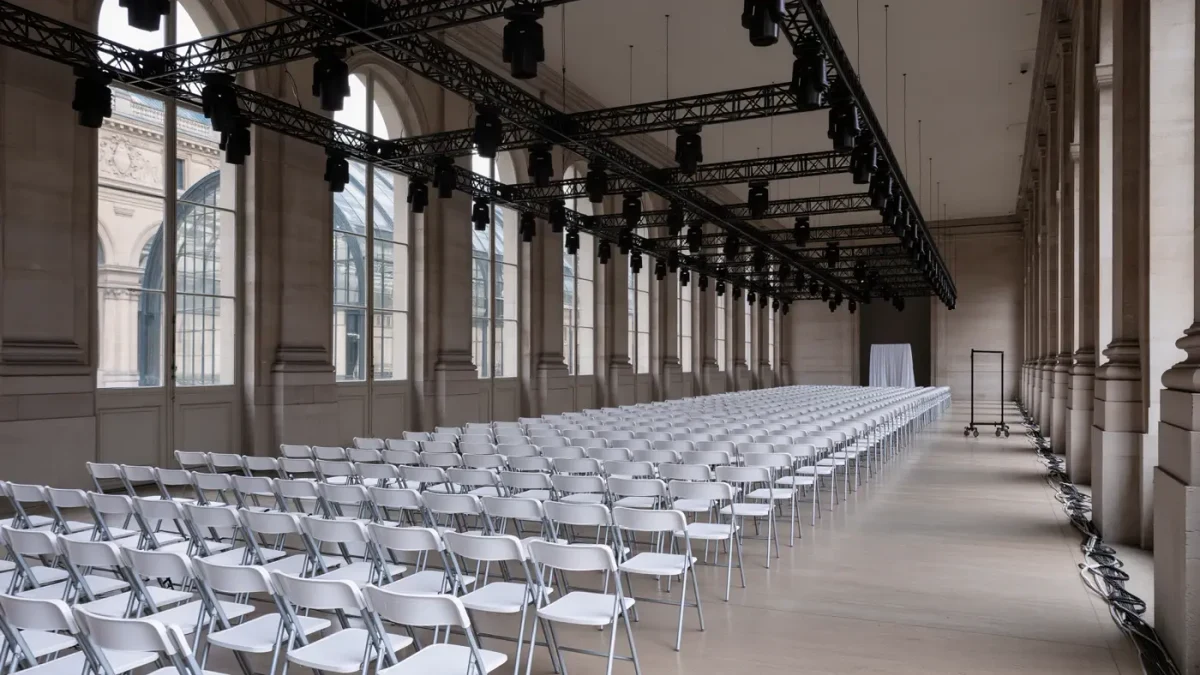
Venue capacity and the guest list are designed together, and the arithmetic reveals priorities. A museum courtyard that seats eight hundred signals a show built for maximum press and celebrity density, with buyers moved to smaller satellite appointments later in the week. A narrow gallery that seats two hundred signals the opposite: scarcity as a statement, where exclusion is part of the message. Houses also calibrate standing room, photographic platforms and livestream camera tracks to the geometry of the space, which is why venue scouting reports read like lighting plots. Even the arrival path is curated — a long walk through a colonnade builds the same anticipation a runway otherwise carries, and some houses deliberately extend that walk so the building does half the storytelling before the first model appears.
None of this is improvised. Venue contracts are signed months ahead, and the calendar's fixed dates mean several houses compete for the same addresses each season. The result is an unofficial hierarchy of spaces, understood by every production agency in the city, where securing a particular courtyard in a particular order is itself a signal of standing within the federation's pecking order.
Why do brands stage shows far from the capital?
Because a destination show trades a venue for a headline. The cruise or resort collections, which sit between the main seasons, are routinely staged outside fashion's capitals precisely so the location itself becomes the story — Dior's 2024 resort show in Mexico City, set at a modernist house, generated coverage across three continents before a single look was reviewed. Jacquemus took its 2023 show to the gardens of Versailles, proving an emerging French label could rent the same symbolic architecture as the grandes maisons. The calculation is straightforward: airfare for a few hundred guests is cheap against the earned media value of a photograph with an unmistakable skyline in it.
Who pays for these venues, and how much?
Costs vary enormously by site and season, and figures are rarely disclosed, but production insiders consistently describe venue fees as one of the smaller line items in a major show. Lighting, sound, seating, scenography, security and catering typically dwarf the rent; a landmark space may cost tens of thousands of euros for a day while total show budgets climb into the millions. Municipalities sometimes participate indirectly, permitting landmark use because the economic footprint of fashion week — hotels, restaurants, taxis across nine days of shows — lands in the city's own accounts. That shared interest keeps the negotiation friendly, and keeps the calendar anchored to the same addresses year after year.
Is the physical venue losing importance?
Only partially. Livestreams since 2020 and social-first show formats have decoupled the audience from the room, and some houses now design venues primarily as camera sets. Yet the physical site has not weakened — it has been re-priced. A monument behind a runway now works simultaneously for the few hundred seats and the millions of screens, which raises, rather than lowers, the value of an unmistakable location. The geography of fashion week, always strategic, has simply gone global in its audience while staying stubbornly local in its addresses.
What does venue geography predict about a season?
More than critics admit. When a house returns to a historic site, expect a collection arguing for continuity; when it picks a raw industrial space, expect a reset. The map is the memo. Read the venue list before the first look goes down the runway, and the season's power structure is already legible.