Minimal accessorizing is a system of limits: three jewelry pieces at most, one metal tone throughout, one watch worn to habit, and bags and belts in a small set of serious neutrals. The effect reads as more, not less — a plain outfit with one strong cuff looks decided, while the same outfit under six small pieces looks uncertain. The method below explains the limits, the exception that proves each of them, and why the quietest hands in a room are usually the best dressed.
Why do fewer accessories read as more expensive?
Because attention is the scarcest material in dressing, and each piece spends it. Stylists describe the effect as a focal budget: one object at the wrist or collar collects the eye and borrows importance from the outfit's calm; a dozen small objects divide that attention until nothing registers. Luxury dressing has always worked this way — the great houses' accessories strategy on their runways has long favored one statement object per look precisely because scarcity creates the impression of value. The minimal system simply applies the runway's economy to a Tuesday.
There is a practical dividend too. A small accessory wardrobe is maintained, not accumulated: each piece is worn often enough to justify quality, cleaned enough to stay bright, and known well enough to be worn without deliberation. The minimal system's real luxury is the disappearance of the question.
What are the core rules of the minimal system?
Four limits carry it. First, the count: three jewelry pieces at a time — a common formulation is ear, neck, wrist, with one slot left deliberately empty. Second, the metal: one tone, gold or silver, across every piece worn in a day; mixed metals are a deliberate styling choice for the experienced, but the single tone is what produces the composed effect minimalism promises. Third, the watch: one, worn to habit, chosen once and worn for years. Fourth, the scale rule: within any outfit, one piece may be large, everything else small — a cuff with plain studs, a statement necklace with a bare wrist.
These rules are deliberately strict so that breaking them means something. Two metals worn knowingly reads as styling; two metals worn accidentally reads as laundry day. The system's value is not the rules themselves but the intentionality they force.
Which pieces earn their place in a minimal jewelry box?
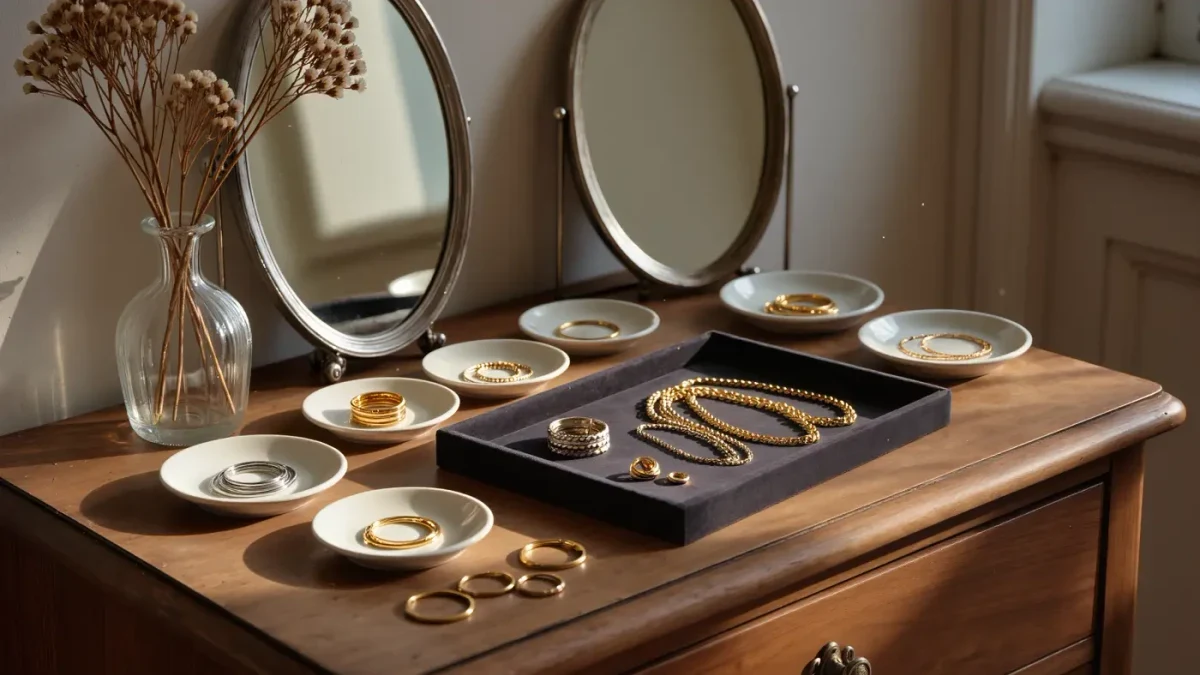
The standard core has barely changed in decades because each piece is scale-flexible. Small studs or slim hoops cover the ears daily. A thin chain — alone or with one pendant — covers the neck without competing with necklines. A slim bangle or a plain band covers the wrist; a signet or a simple ring covers the hand. Hoops deserve their perennial status: their curve repeats the jawline, and their diameter dial — 10 millimeters for day, 25 and up for evening — makes one pair span both registers. The purchase order for a starting box is studs, chain, hoops, then the watch, then everything else, which should take years and is better for the waiting.
| Piece | Day register | Evening register |
|---|---|---|
| Studs or slim hoops | 10-15 mm, plain metal | Larger hoops or one stone |
| Thin chain | Bare or small pendant | Layered with one second chain |
| Wrist piece | Watch or slim bangle | Cuff, worn alone |
| Bag | Structured tote, dark neutral | Small clutch, texture over color |
How do bags and belts fit the minimal budget?
As infrastructure, not decoration. The minimal wardrobe keeps few bags, in deep neutrals — black, dark brown, taupe — chosen for structure rather than logo, and one belt per shoe family so that leather tones rhyme from waist to foot. The styling convention worth keeping: belt and shoe leather should match or agree closely, since a black belt over brown loafers breaks an outfit's floor line. Beyond that, minimal bags earn their keep through hardware discipline — plain, unfussy fittings, no monograms — and through daily use, because a good bag develops a patina of wear that no new purchase replicates.
When should the rules be broken, and how?
Twice, productively. Evening is the licensed exception: the count relaxes, the single large piece grows larger — a cuff becomes a sculpture, hoops become rings — because low light forgives scale and the outfit's simplicity supports it. And layering is the second exception, when done as a deliberate set: two or three thin chains of graded length worn as one unit read as a single composed object, not as three decisions. The failure mode is never the exception itself but the drift — exceptions chosen weekly become the default, and the system's economy is lost.
How does a minimal accessory wardrobe stay interesting over years?
Through maintenance, milestones and rotation of one. The system's pieces are few enough to be cared for properly — soft cloths, separate pouches, an annual check of clasps and settings — and few enough to be known, so that one new piece, chosen slowly and added to a stable core, changes the whole box's character. Jewelry traditions that prize few pieces have always understood this: value compounds through familiarity. The verdict of the method is quiet but not silent — minimal accessorizing does not lower the volume of a look. It raises it, by making the one piece that remains impossible to miss.
What about non-jewelry accessories — hats, scarves, glasses?
The same focal economy extends to them. A hat is a scale-claiming object: worn well, it replaces the day's jewelry rather than joining it, taking the neck slot's attention budget for the head. Glasses, worn daily, are the one accessory most people already own — and frames deserve the minimal system's discipline more than anything: one shape, chosen slowly, worn for years, since the face's most persistent accessory is the one least able to hide a wrong decision. Scarves and gloves rotate seasonally without counting against the jewelry limit, though they obey the one-large-piece rule alongside it — a printed scarf and a statement cuff on the same outfit compete, and one of them should leave.
How do you declutter an overflowing accessory drawer?
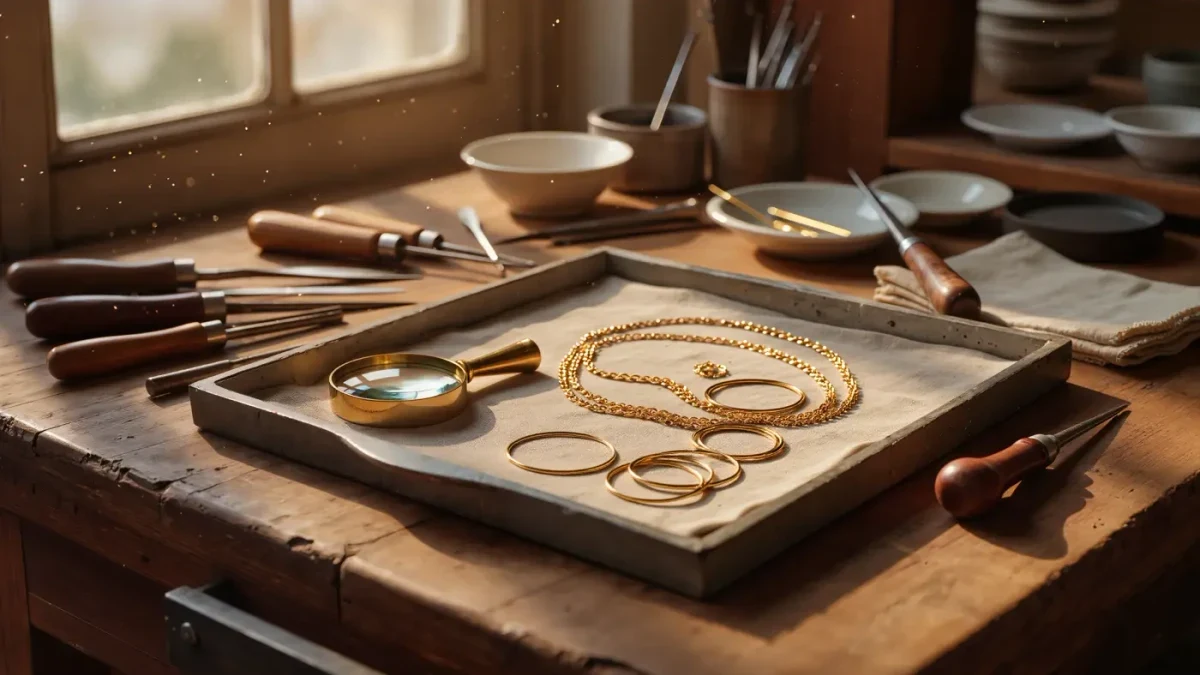
By the same calendar test the capsule wardrobe uses, applied ruthlessly. Everything onto a table, then three questions per piece: worn this year, working with the current palette, and worth maintaining — clasps intact, plating unpeeled, stones secure. Anything failing two questions goes to donation or resale; the early-2020s growth of resale platforms gave even costume pieces a second market. What remains is usually twenty to thirty percent of the drawer, and the surviving pieces share the traits this guide has recommended buying: plain metals, flexible scales, no novelty. The drawer ends lighter, the mornings end faster, and nothing that remains needs an occasion to be worn.