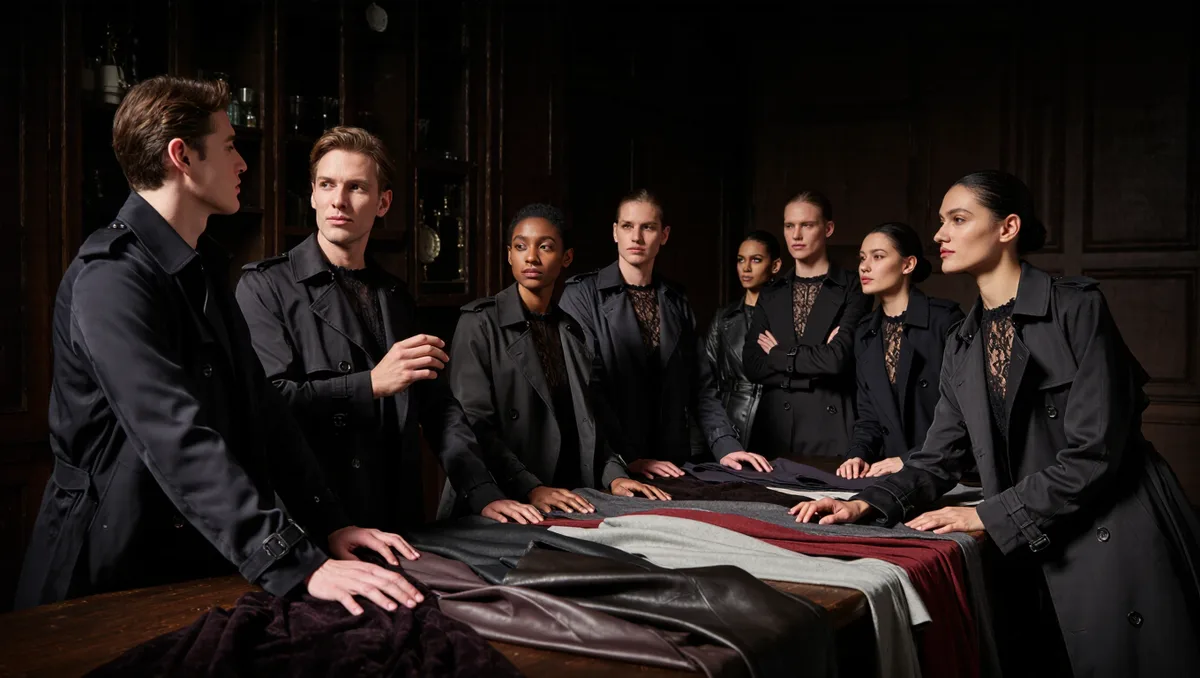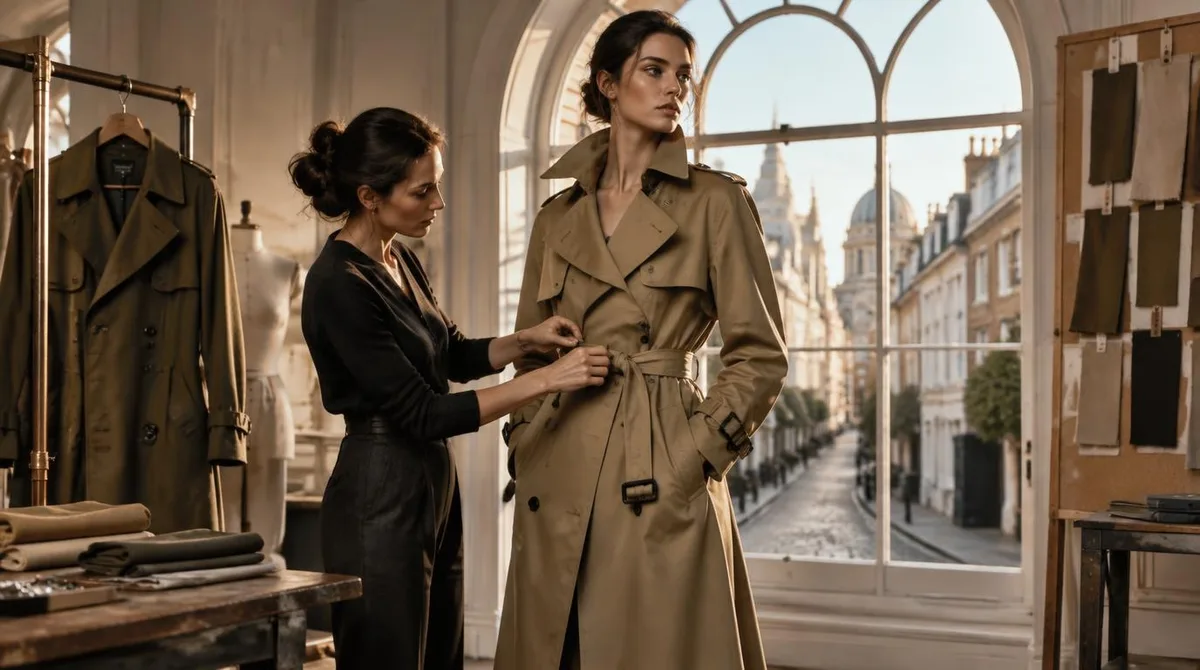
The trench coat keeps its job while hemlines rotate around it. Thomas Burberry invented gabardine in 1879, and the house’s own heritage record sends every later version back to that cloth. Soldier-made and film-tested, one silhouette has outlasted a century of trend cycles. The rule holds.
The caveat sits in the record itself. Longevity is documented piece by piece, mill by mill, and each era must reissue the coat to keep it. An archive alone does not sell outerwear. That same endurance test sits behind what a handbag’s resale value really depends on, where the receipt trail decides the price.
The running file on coats and cycles lives on the site’s fashion news hub. The beat follows the paper trail, and the trail on this coat is unusually deep.
Where Did the Trench Coat Come From?
War wrote the first spec. Wikipedia’s entry traces the coat to British Army officers before the First World War, and trench service gave it the name. Burberry’s heritage page credits the Tielocken, cut from the house’s gabardine, as the direct predecessor. Function drew the lines. We covered a connected angle in ASICS Rules Resale: StockX Data Shows Running Shoes Led 2025.
The hardware carried orders. Per the house’s heritage record, epaulettes showed an officer’s rank, and the belt’s metal D-rings carried equipment. The cloth carried the rest. Gabardine breathed where oil-and-rubber waterproofs went stuffy, which is the house’s own accounting of why the design stuck. That spine is what trench coat history runs on. Cloth came first, service came after, and the wardrobe kept the result.
How Did the Screen Make It a Signature?
Cinema gave the coat its second career. Wikipedia’s trench coat entry records that Humphrey Bogart popularised the coat, and that Peter Sellers carried it through the Pink Panther films. A military surplus piece turned leading-man uniform. The silhouette now sold attitude along with weather cover.
The typecast stuck after the war reel ended. A belted, double-breasted cut with a storm flap reads as authority on any street. The details were utility first, per Wikipedia’s record, and style adopted them wholesale. Few garments borrow so much presence from so little change.
Why Do Houses Keep Reissuing It?
Craft keeps the file current. Burberry’s heritage trench coats have been manufactured in Castleford, Yorkshire for over 50 years, per the house’s record, and the gabardine is woven at the mill in Keighley. The collar alone runs to eight parts and up to 270 stitches. Nothing about that reads disposable.
- Craft case: Castleford production past 50 years, plus collar stitching that can take up to a year to learn, per the house.
- Runway case: Daniel Lee’s February London fashion week show opened with an ivory trench-ballgown hybrid, per the Guardian’s report.
What Do the Current Numbers Say?
The market data runs warm. Lyst, the fashion search and sales tracker, ranked Burberry’s check scarf fourth among the quarter’s hottest items in late 2025, with overall demand for the brand up 239% year on year, per the Guardian’s show report. The house’s current adverts add Twiggy in a snake-print car coat and Maya Wigram in a laser-cut trenchcoat.
Expectation, on that record, points one way. The Guardian’s coverage frames the house as doubling down on outerwear as its bread and butter, aimed at a customer prepared to invest in a coat. Houses do not place their biggest bets twice on a silhouette that fails. The trench keeps clearing the test.
Conclusion: The Silhouette That Keeps Its Receipts
The case closes on names. Gabardine dates to 1879. The trenches gave the coat its name, and Bogart and Sellers moved it onto the screen. Daniel Lee’s show put it in the opening slot this season, and Lyst’s numbers logged the demand behind it. The expectation from every record cited here is persistence. One silhouette, kept current by fresh cloth and fresh collections, does not leave. Readers following this should also see Fashion Week Trends Explained — What Fashion Week Really Tells Us About Next Season: A Reader's Guide.