Fashion photography as a modern art form dates to 1911, when Edward Steichen shot gowns by couturier Paul Poiret for a French art magazine — moody, atmospheric images that treated a dress as a subject rather than a catalog entry. In the century that followed, a short line of photographers each invented a way of seeing that fashion still uses: the studio glamour of the 1920s, the kinetic realism of the 1950s, the gritty candor of the 1990s. The history of the genre is, in effect, the history of the modern eye.
Why does 1911 count as the beginning?
Because Steichen's Poiret series did something previous fashion imagery did not: it photographed clothing in darkness, shadow and suggestion, borrowing the atmosphere of pictorialist art rather than the flat clarity of commercial illustration. Before 1911, fashion images existed mainly as engravings and plates; early photographs of dress were functional records. Steichen, already a celebrated art photographer, made the gown mysterious — and publishers noticed that mystery sold. Baron Adolf de Meyer carried the aesthetic into Condé Nast's stable soon after, becoming the first great full-time studio fashion photographer, all gauze, elegance and aristocratic light.
The founding generation established the genre's core bargain: photography would serve fashion only if fashion allowed photography its own language.
What did the mid-century revolution change?
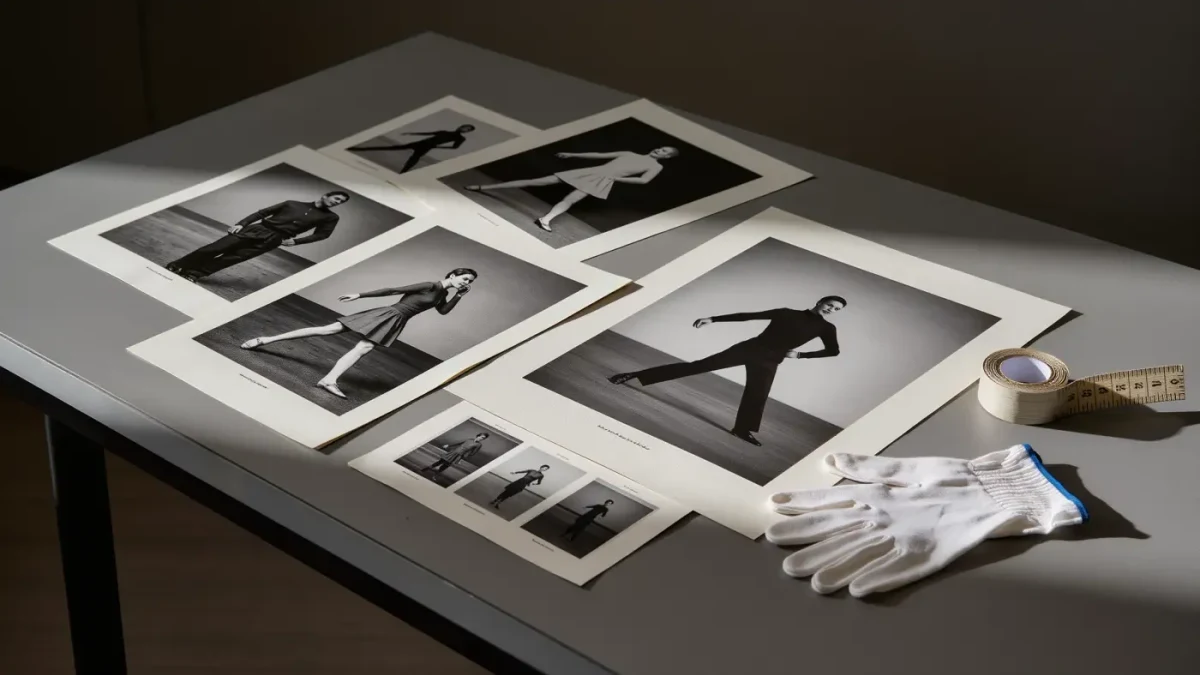
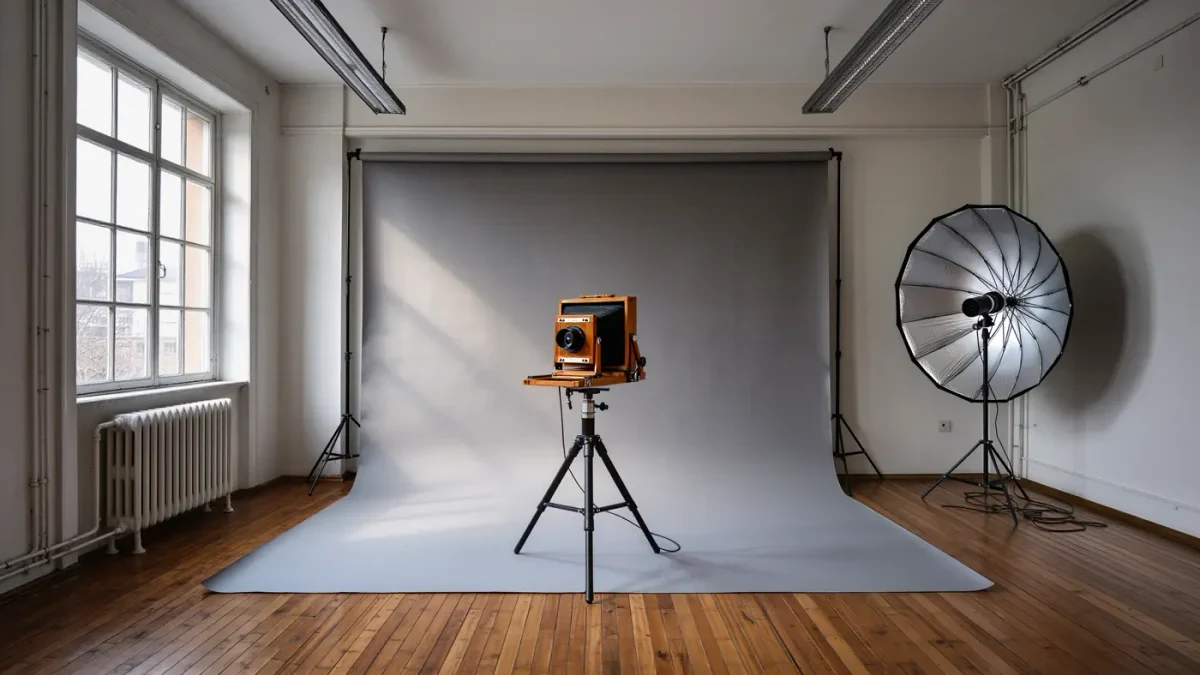
Location and motion. At Harper's Bazaar under editor Carmel Snow and art director Alexey Brodovitch, a generation led by Richard Avedon and Irving Penn dismantled the frozen studio pose. Avedon's 1955 image of model Dovima in a black Dior gown posed between two circus elephants — shot at the Cirque d'Hiver in Paris — remains the genre's most reproduced photograph precisely because it replaced the backdrop with an idea: elegance measured against the opposite of elegance. Penn, meanwhile, proved that reduction could be as dramatic as spectacle, shooting couture against bare grey paper so nothing competed with the line of a garment.
Their lesson still governs campaigns today: a photograph is not a record of a dress but an argument about it, staged wherever the argument lands hardest.
| Era | Defining photographers | Optical invention |
|---|---|---|
| 1910s–1930s | Steichen, de Meyer, Horst | Studio glamour and atmosphere |
| 1940s–1960s | Avedon, Penn, Bailey | Motion, location, street energy |
| 1970s–1980s | Newton, Bourdin | Narrative danger and staged fiction |
| 1990s–2000s | Corinne Day, Meisel | Documentary candor and realism |
Which decade broke the rules most completely?
The 1970s. Helmut Newton and Guy Bourdin, working roughly in parallel, turned the fashion photograph into a film still with the plot withheld — suspended narratives, hard flash, danger in the frame. Bourdin's shoe campaigns read like crime scenes with impeccable styling; Newton's models occupied hotel corridors and night streets with an agency that scandalized and fascinated in equal measure. Editors complained, advertisers wavered, and the imagery became legendary anyway. The 1970s proved that discomfort, controlled, is a commercial asset — a finding every provocative campaign since has traded on.
How did color and light become a language of their own?
Slowly, then decisively. Early color processes rendered fabric badly — dyes shifted, skin went sallow — so studios treated color as a technical problem long after it was commercially available. The generation that solved it, photographers like Horst in the late 1930s and the postwar color specialists who followed, approached light architecturally: a shaft designed to fall across a shoulder line, a bounce card to lift a shadow under a jaw. Their discoveries became the unspoken grammar every campaign still speaks — the assumption that a garment's color is a constructed fact rather than a given. When later photographers broke that grammar deliberately, hard on-camera flash, mixed daylight with tungsten, the shock registered precisely because the baseline was so codified. Fashion photography's technical history is therefore inseparable from its aesthetic one: every argument about realism or glamour is, underneath, an argument about lighting, and the century's great photographers are best understood as lighting designers who happened to use models.
How did the 1990s change what a model looks like?
By pointing the camera at reality. Corinne Day's grainy, apartment-lit images of a young Kate Moss — including the famous 1993 magazine series shot in a flat with bare bulbs — inaugurated the grunge and "heroin chic" era, trading gloss for documentation. The aesthetic shifted the genre's center of gravity from aspiration toward intimacy: freckles, unstyled hair, the visual grammar of a snapshot. Steven Meisel kept one foot in each world, running satirical high-gloss productions one season and stark realism the next. That oscillation — polish versus candor — is still the genre's central tension, and every current campaign positions itself somewhere on the line the 1990s drew.
Who were the genre's great outsiders?
The photographers who arrived from other disciplines and kept their foreign instincts. Man Ray, an artist first, treated fashion commissions as experiments and left the genre freer for it. Avedon began as a merchant marine photographer taking identification portraits, and the tight frontal frame never left his work. Corinne Day came through British modeling and magazine subculture rather than assisting any establishment studio. The pattern is consistent enough to be a lesson: each time the genre's conventions calcified, an outsider with an incompatible education broke them, and the industry absorbed the rupture within a decade. It suggests the next transformation is already visible somewhere outside the studios — in whatever discipline is currently teaching a different way of framing a body in cloth.
Where did street style photography come from?
From a single persistent idea: that real people dressing on real sidewalks could outrank the runway. Bill Cunningham's decades of unposed New York documentation, beginning with his serendipitous 1978 photograph of Greta Garbo, established the genre; by the 2000s the sidewalk outside a show had become a second runway, and photographers shooting arrivals were publishing before the official images landed. Street style completed a circle the medium opened in 1911 — fashion observed outside the studio — but with the hierarchy reversed: now the photograph confers fashionability rather than recording it.
What does the smartphone era change?
Distribution, and therefore tone. When every campaign reaches phones before paper, images are composed for vertical crops and three-second attention, and the genre's history reads as preparation for this speed. Yet archives keep the standards: institutions such as the Library of Congress hold Steichen's era of the medium, and museum retrospectives of Avedon, Penn and Newton draw the same crowds as the couture they photographed. The verdict, after eleven decades: fashion photography has never merely shown clothes. It has taught each generation how — and where, and in what light — to want them.