A single scarf, worn nine ways, behaves like nine accessories: knotted at the neck it formalizes a tee, braided through a bag handle it changes the bag, folded as a headband or tied at the waist it re-proportions an outfit. Silk squares in the 90 by 90 centimeter format remain the most versatile — large enough for every technique below — while long oblongs and wool squares extend the range into winter. What follows is the technique list, each with the knot that actually holds.
Why is the scarf the fastest outfit upgrade?
Because it adds color, pattern and intention without touching the garment's fit. Stylists reach for scarves precisely when an outfit reads flat: a gray knit and navy trousers become a decision the moment a printed square appears at the collar. The technique's pedigree is decades deep — the folded triangle at the neck has cycled through aviation, cinema and every resort collection since the 1950s — and its modern revival through the 2020s put the scarf back at bag handles and ponytails as much as necks. The tool costs less than any garment it upgrades, and it never needs a fitting.
How do you wear a scarf at the neck without looking vintage?
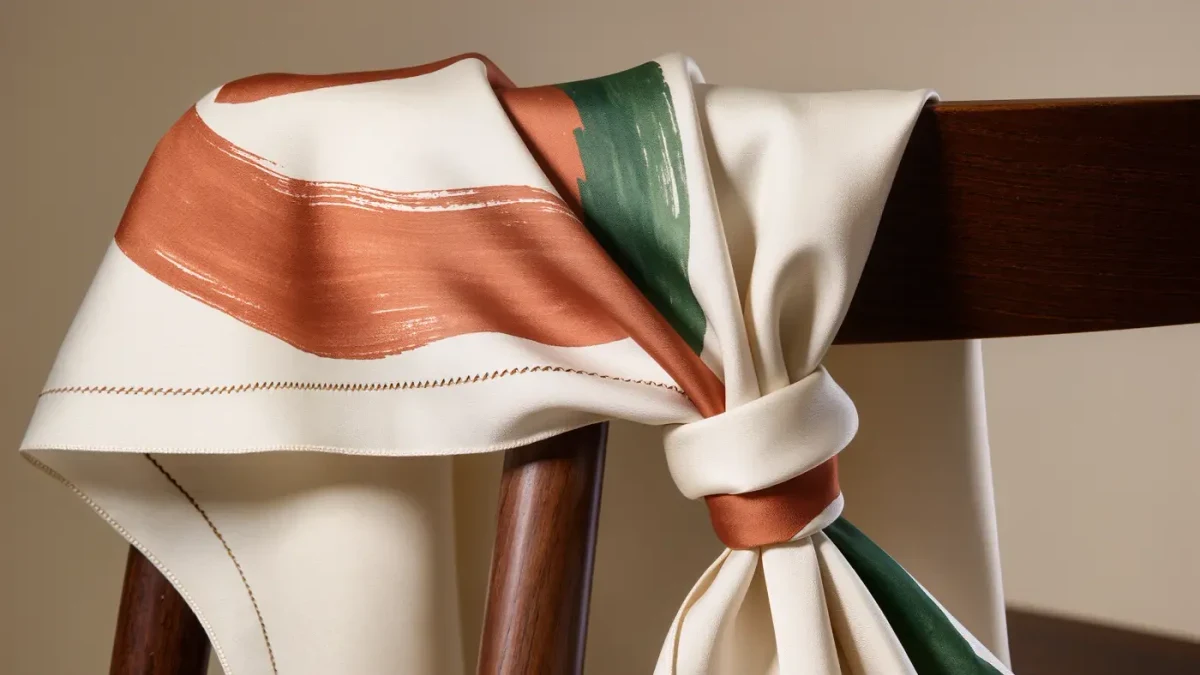
Three knots cover it. The cravat fold: fold the square in half into a triangle, roll from the point into a band, drape around the neck and knot once at the front, letting the ends fall — clean under a blazer, sharper over a crew neck. The neckerchief: a smaller roll tied tight to the throat with the knot turned to the side, worn best with open collars. The loose loop: a long oblong draped once around the neck with no knot at all, which reads modern precisely because it looks unresolved. The key to avoiding costume is scale — a slim band reads as styling, a billowing volume reads as reenactment.
What are the best non-neck techniques?
The bag handle braid, the single most photographed scarf move of recent seasons: fold the scarf into a band, wind it in a spiral around the handle or strap, and knot the ends under, tucking them out of sight. A plain tote or a scuffed handle disappears beneath it. The headband fold: roll the scarf into a band and tie low at the nape with hair half-up, or wrap twice over a ponytail for the longest-lasting version. The wrist wrap: two or three turns of a slim band like a bracelet, knotted at the top — small, and surprisingly effective with a watch-free wrist.
Two further moves re-proportion rather than decorate. The waist sash: run the scarf through belt loops or simply around the waist over a blazer or slip dress, knotting at the side — it marks the waist on garments that have none. And the shoulder drape: the full square worn open across the shoulders like a shawl, corners crossed and tucked into a belt at the back for evening; it substitutes for a wrap in spring and autumn, which is why resort collections ship them by default.
Which fabric suits which technique?
Silk twill is the all-rounder: heavy enough to hold a knot, glossy enough to read as occasion. Silk-chiffon and cotton voile suit loose loops and hair wraps but collapse in structural knots. Wool and cashmere squares — the winter equivalents — hold every neck knot firmly and add the bulk that thin silks cannot; a wool square over a coat does the job a silk square does over a tee. Viscose blends sit at every price point and drape acceptably, though they crease at knots faster. Hand-rolled edges remain the quality marker across all of them: the hem is stitched by hand, lies flat, and ties without the stiffness of machine hems.
| Technique | Works on | Holding knot |
|---|---|---|
| Cravat band | Tees, shirts, blazers | Single front knot |
| Bag handle braid | Totes, top handles | Spiral wrap, tucked ends |
| Hair wrap | Ponytails, half-up styles | Double knot at nape |
| Waist sash | Slip dresses, open blazers | Side knot |
| Shoulder drape | Evening, sleeveless dresses | Corners tucked to belt |
How do you choose a scarf that works with a whole wardrobe?
By echo, not by match. The reliable method is to pick a print that contains at least one color already present in at least three existing garments — a scarf with rust and ivory serves a camel-and-cream wardrobe; a scarf of unknown colors serves nothing. Size follows ambition: a 45 by 45 centimeter square handles neck and wrist work only; the 90 by 90 format covers every technique in this guide; oblongs around 30 by 180 suit loops and draping. One large square in a personal palette outperforms several small novelty ones.
How do you tie a scarf so it stays put all day?
Tension and geometry. The techniques that last share two features: a rolled — never folded — band, which resists slipping because the layers grip each other, and a flat anchor point, a knot set against the body or handle rather than floating. On hair, silk slides; a discreet hidden pin at the knot ends the problem. On necks, the once-knotted cravat holds longer than any bow. The verdict after nine techniques: the scarf rewards practice more than purchase — one good square, three learned knots, and the wardrobe gains an accessory drawer it never bought — and spring's plainest coat gains its best line.
How do you care for the scarves you already own?
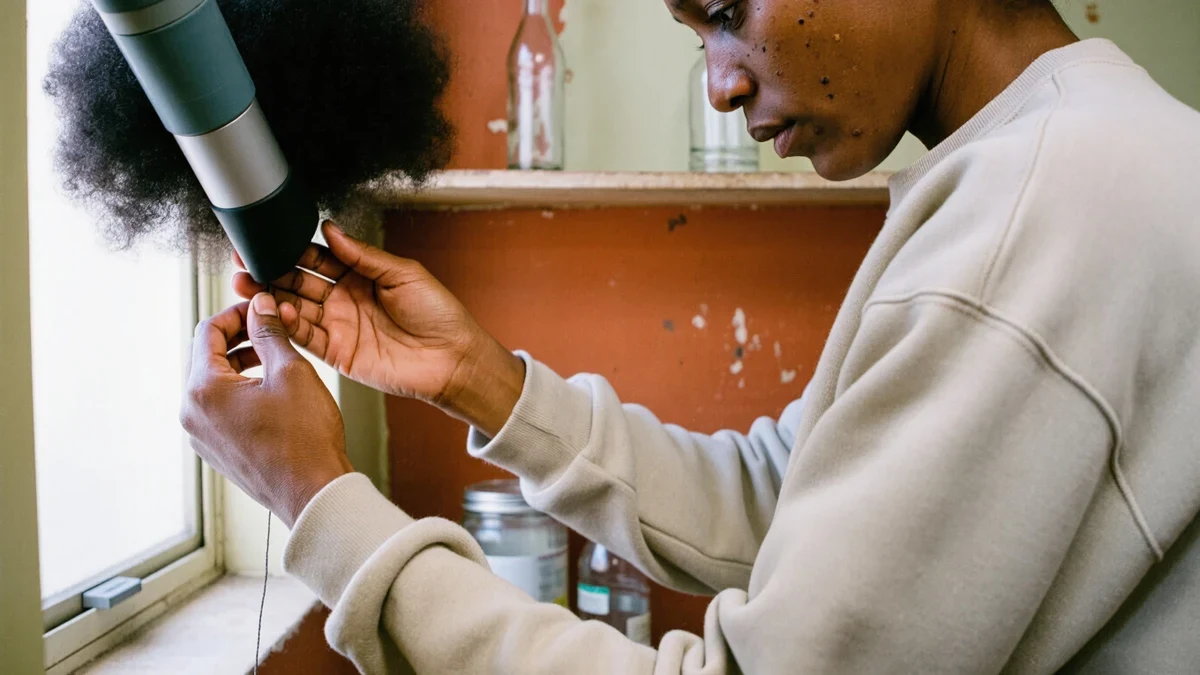
Gently, and rarely. Silk tolerates far less friction than its reputation suggests: hand wash cold with a pH-neutral detergent, roll in a towel to absorb water, and press on the reverse at low heat while barely damp. Store squares folded with tissue at the creases, or rolled, since sharp folds over years set permanent lines through printed silk. Snags should never be pulled — the thread is drawn forward to the reverse with a needle and left. A cared-for silk square is one of the few accessories that outlives the garments it upgrades, which is precisely why vintage squares remain the most hunted items in the category.