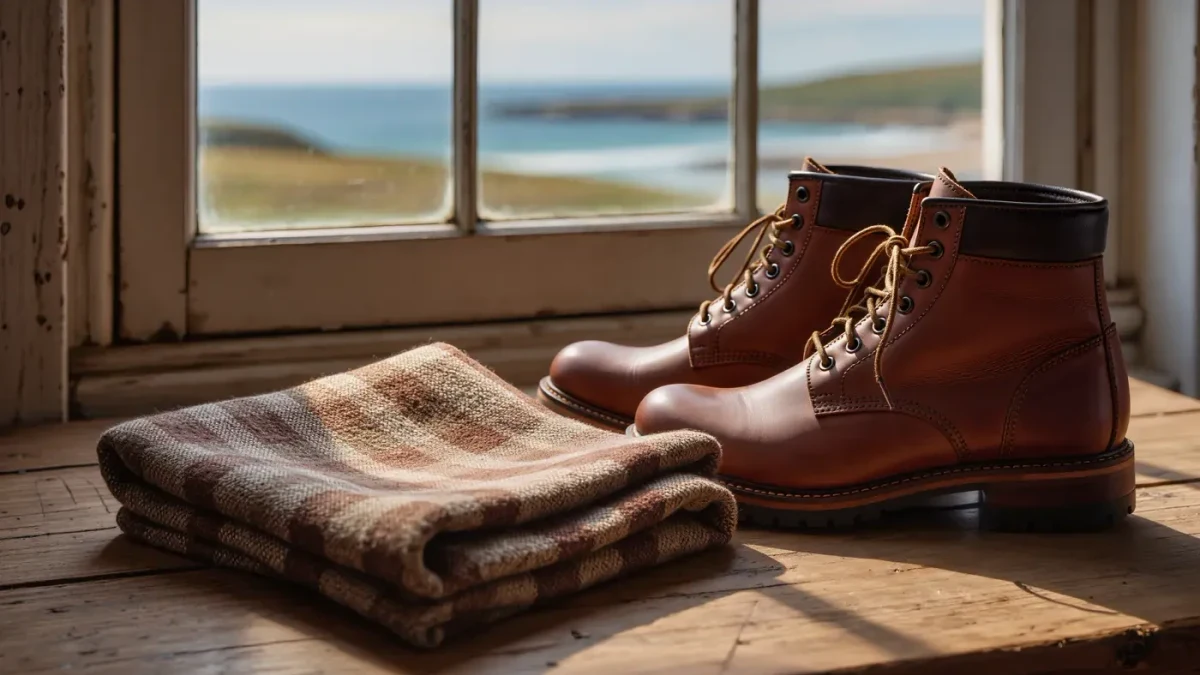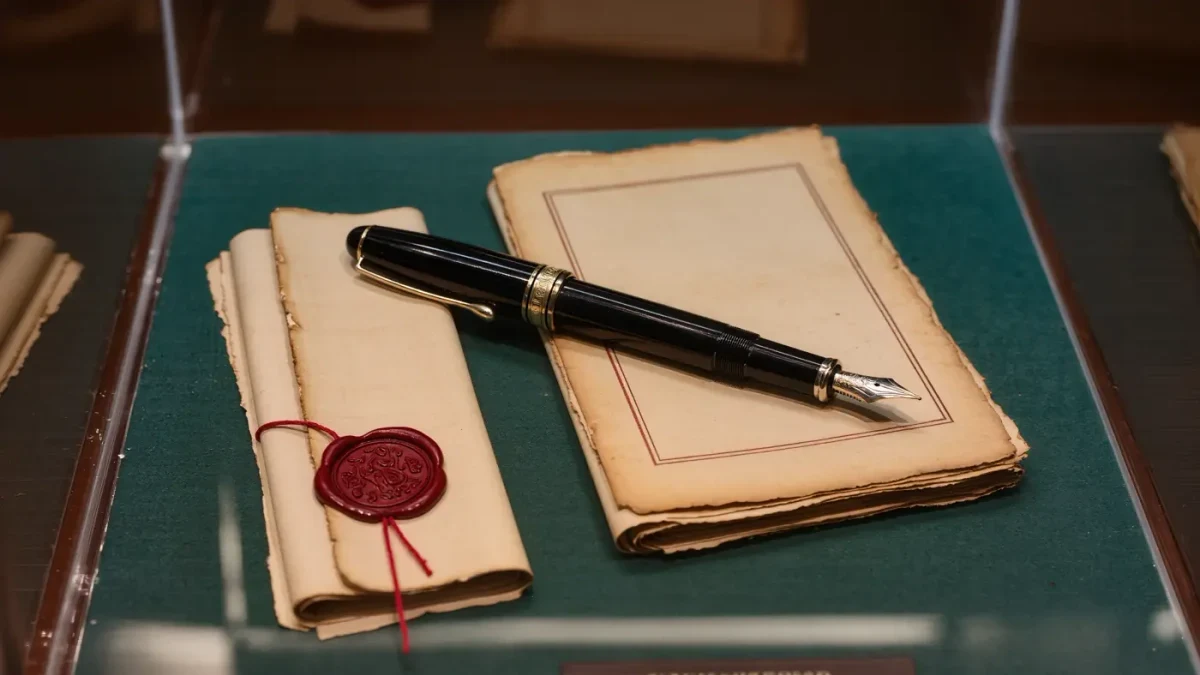
Denim, tweed and silk are cultural inheritance because each carries a documented history of place, law and labor that predates every brand currently selling them. The word "jeans" descends from Genoa, "denim" from serge de Nîmes, and the fabric's defining feature — riveted stress points — dates to a United States patent granted to Jacob Davis and Levi Strauss on May 20, 1873. A wardrobe, read properly, is an archive. Three of its most important entries are below.
How did workwear become the world's default trousers?
Through patents, then through politics. Davis, a Reno tailor, had the idea of reinforcing work overalls with copper rivets at the pockets; lacking funds for the paperwork, he partnered with his fabric supplier, Levi Strauss, and the resulting patent 139,121 created what became blue jeans. For decades the trousers stayed working-class — miners, ranch hands, farmers — until mid-20th-century cinema and youth culture re-coded them as rebellion, and later as leisure everywhere. Japanese mills added the heritage chapter: in Okayama prefecture, the Kojima district began weaving selvedge denim on vintage shuttle looms, and by the 2000s "Japanese denim" had become the connoisseur's standard, prized for a slubby, rope-dyed texture that modern high-speed looms cannot reproduce.
The lesson of denim is that no fabric stays where its inventors put it.
What makes Harris Tweed legally unique?
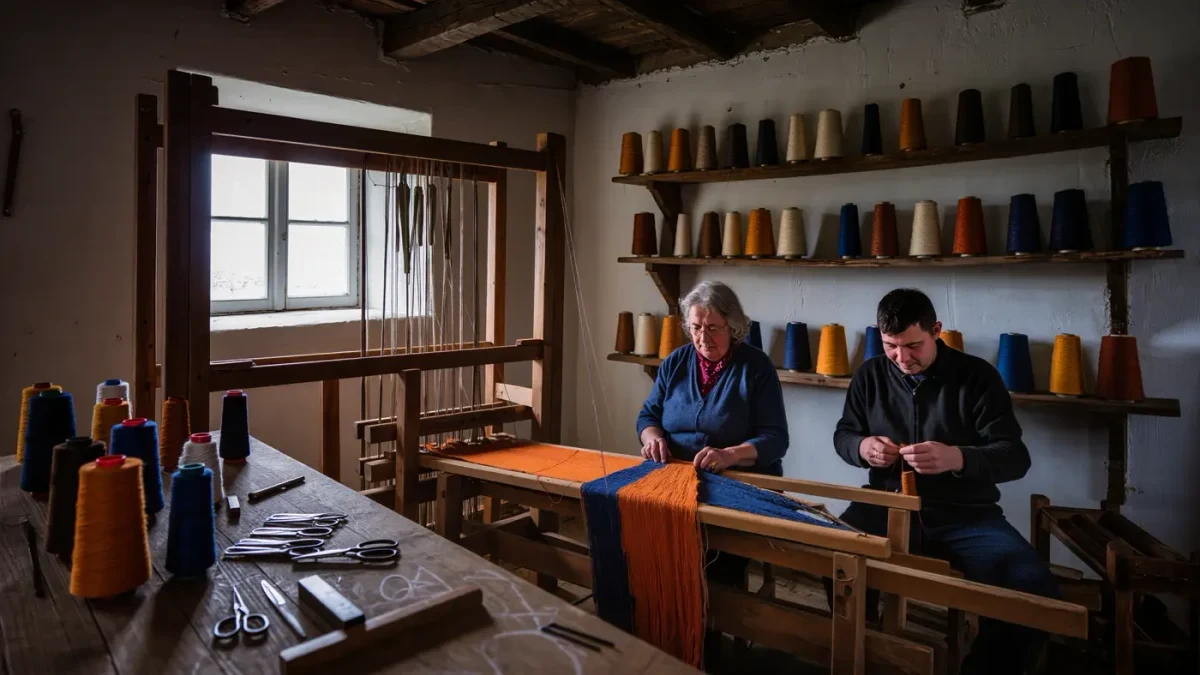
It is cloth protected by its own act of parliament. Woven in the Outer Hebrides of Scotland by islanders in their homes, Harris Tweed carries the Orb mark — registered in the first decade of the 20th century to fight counterfeit "Harris" cloth on the mainland — and its definition is enforced under the Harris Tweed Act 1993: handwoven by the islanders of Lewis, Harris, Uist and Barra, finished in the islands, of pure virgin wool. Every meter is inspected and stamped by the Harris Tweed Authority. The result is one of the few textiles on earth whose provenance is not a marketing claim but a statute, with weaving certificates tracing each bolt back to a specific weaver's shed.
That legal spine is why the cloth survived automation: nobody elsewhere can make the real thing, so nobody can undercut it out of existence.
| Textile | Origin document | Protection today |
|---|---|---|
| Denim (riveted jeans) | US patent 139,121, 1873 | Brand trademarks; heritage-mill labeling |
| Harris Tweed | Orb mark, registered 1909 | Harris Tweed Act 1993, stamped by authority |
| Cultivated silk | Sericulture traditions, ancient China | Geographical indications (Como, Lyon) |
Why does silk carry the oldest story?
Because it is the only one of the three with a legend attached. Chinese tradition credits Empress Leizu, some 4,000 years ago, with discovering that a cocoon unwinds into a single continuous filament — and for millennia the sericulture techniques behind cultivated mulberry silk were state secrets worth more than gold, traveling the trade routes that later took the name Silk Road. The craft eventually settled in Europe's mill towns: Lyon, whose silk workers' uprisings of the 1830s are woven into labor history, and Como, where Italian finishing turned raw filament into the liquid drape fashion now treats as shorthand for luxury. A modern silk blouse inherits all of it — sericulture, secret, strike and mill.
Who keeps these traditions alive now?
A working population, not a museum staff. In the Hebrides, several hundred weavers still work the Orb-marked cloth from home sheds. Okayama's mills run shuttle looms around the clock for a global selvedge market. In Como and in Bihar and Assam, where wild and cultivated silks continue their own traditions, entire regional economies remain anchored to filament and loom. Fashion's current turn toward provenance — garment passports, fiber traceability, geographic indications — is, at bottom, this population's story entering the label. Consumers increasingly ask not only what a garment is made of but who made the material, and the textiles above are the ones with an answer.
What happens when heritage cloth meets the secondhand market?
It appreciates, and the market has noticed. Vintage Levi's from the mid-20th century now trade at prices that outpace many contemporary luxury pieces — a pair of 1950s 501s in wearable condition can command thousands of dollars at specialist auctions, and Japanese collectors built an entire archive culture around big-E redlines decades ago. Untouched deadstock Harris Tweed jackets from the 1960s move through resellers with their provenance intact, and the growing garment-passport discussion in European regulation promises to formalize what these markets already practice: documenting a textile's history as part of its value. This creates a feedback loop that favors heritage fabrics. Fast fashion depreciates the day it is bought; documented heritage holds, because its story cannot be reissued. The practical consequence for a modern wardrobe is straightforward — choosing cloth with a verifiable past is one of the few purchases that behaves like preservation rather than consumption, and resale platforms have priced that distinction into the market whether or not the industry has caught up.
Does heritage matter to how a fabric wears?
Often, yes — the history is usually in the hand. Shuttle-loomed denim fades irregularly because the rope-dyed yarn keeps a white core; double-width tweed breathes the way machine felting cannot; silk's filament structure is why no synthetic has quite matched its coolness against skin. These are engineering consequences of old methods, not romance. When a fabric has been refined across generations of a specific place, the refinement is physical: dye penetration, yarn twist, weave density. Heritage, in cloth, is a technology transferred by inheritance — which is exactly why the fast version never feels quite the same.
How should a wardrobe honor the inheritance?
By buying the real thing less often and keeping it longer. A stamped Harris Tweed coat, once resoled of its prejudices and repaired, is a decades-long garment; honest heavyweight selvedge denim earns its fades and can be rewoven when torn; silk rewards gentle washing with decades of drape. Patent records from 1873 at the United States Patent and Trademark Office and parliamentary statutes alike agree on one thing: these cloths were built to outlast their wearers. The verdict, three inheritances later: treat fabric as the archive it is — and the wardrobe starts returning interest.