Perfume is read like text because its ingredients are organized as grammar: top notes open, heart notes narrate, base notes remember. The founding sentence of the modern form is Chanel No 5, composed by Ernest Beaux in 1921, whose overdose of synthetic aldehydes gave a floral bouquet an abstract, metallic sparkle nobody had smelled before. Once an ingredient can be a metaphor — clean, cold, futuristic — a fragrance stops being a scent and becomes a statement. That is the culture this article maps.
Where do the raw materials come from?
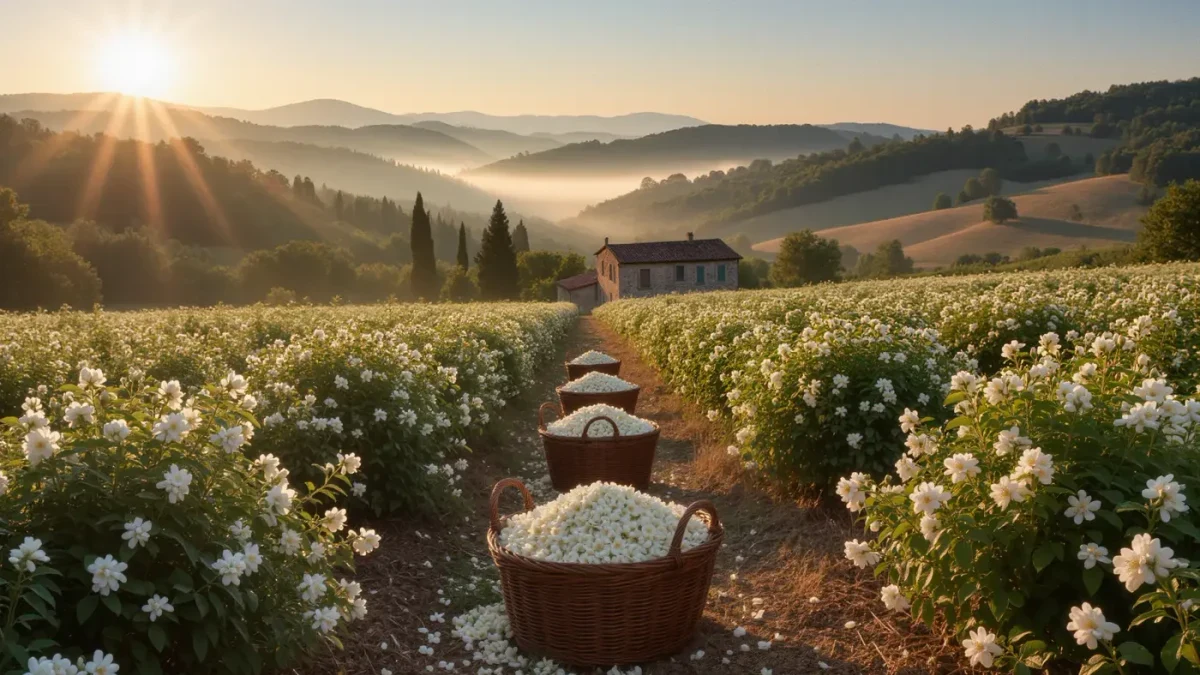
From agriculture before they are ever art. Grasse, in the hills above the French Riviera, remains the symbolic capital: its May rose and jasmine harvests were inscribed on UNESCO's Intangible Cultural Heritage list in 2018, recognizing a knowledge system of cultivation and enfleurage centuries old. The arithmetic is humbling — producing a single kilogram of jasmine absolute requires millions of hand-picked blossoms, which is why houses like Chanel contract entire Grasse fields and estimate that a 30-milliliter bottle of No 5 contains roughly a thousand jasmine flowers. Bergamot arrives from Calabria, oud from the resin-darkened heartwood of infected Aquilaria trees, vetiver from Haitian and Javanese roots. Every perfume, however abstract, is a supply chain first.
What is the pyramid, and who invented it?
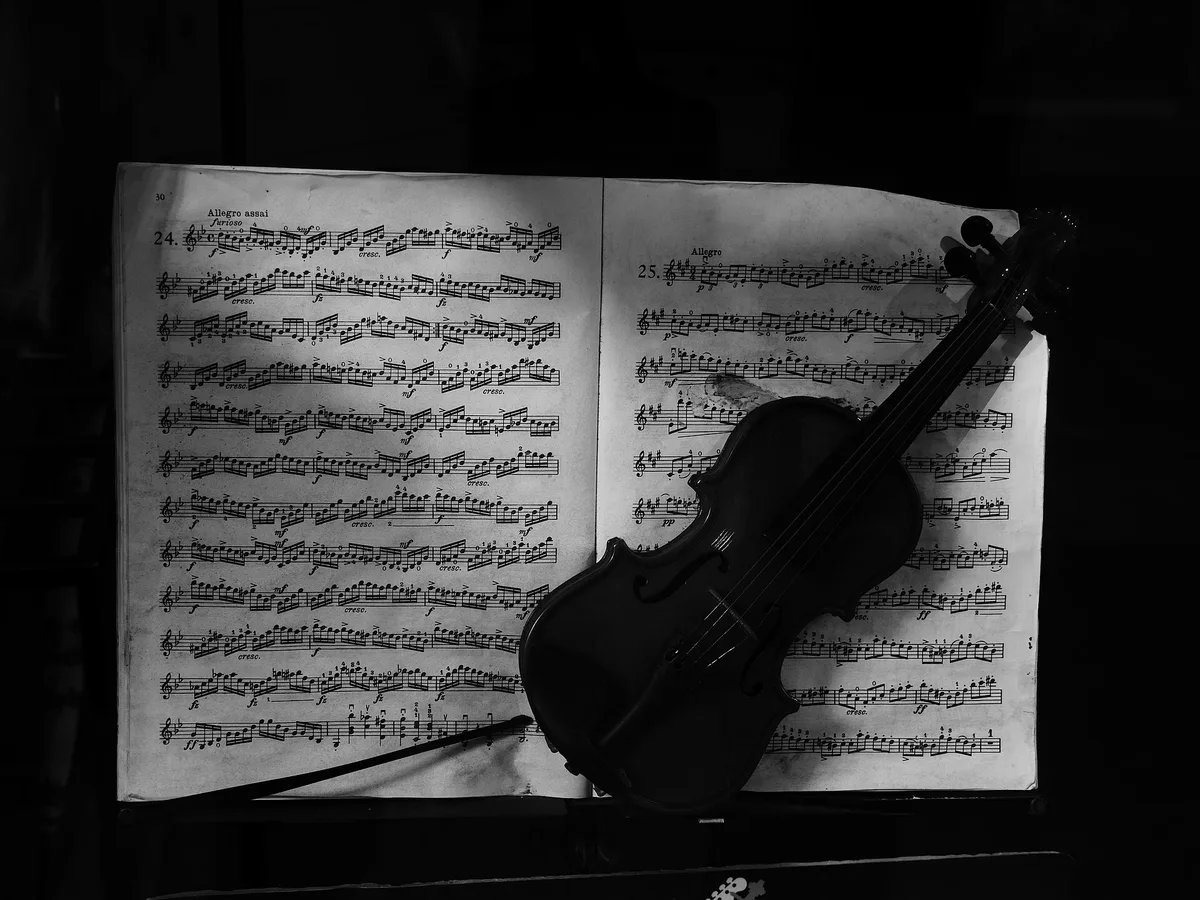
The pyramid — top, heart, base — is the standard diagram of how a fragrance unfolds, formalized through the teaching methods of Jean Carles, the perfumer who ran the great Grasse school of the house of Roure in the 20th century. Top notes, usually citrus and light aromatics, evaporate within minutes. Heart notes, the florals and spices, hold the theme for hours. Base notes — musks, woods, amber materials — anchor the composition on skin for a day. The pyramid matters culturally because it taught wearers to experience perfume as time: a composition you hear in movements, like music, rather than smell all at once.
| Layer | Typical materials | Role in the text |
|---|---|---|
| Top | Bergamot, aldehydes, herbs | Opening statement, first impression |
| Heart | Jasmine, rose, iris, spices | The narrative theme |
| Base | Sandalwood, musk, ambroxan, oud | Memory, longevity, signature |
Why do synthetics get so much credit?
Because abstraction requires them. Natural jasmine is gorgeous but literal; aldehydes, Iso E Super, Ambroxan and their relatives are raw vocabulary — radiance, velvet, mineral glow — that nature does not supply. Beaux's aldehydes in 1921 opened the door, and the great 20th-century compositions walked through it: metal and moss, smoke and leather, oceanic calone. Critics of synthetics miss the point. The materials did not replace nature; they extended the language, exactly as photography extended painting. A modern perfumer fluently mixes both registers, and a literate nose can hear the argument — organic warmth against engineered space — inside a single bottle.
How do wearers actually learn to read?
By comparative smelling, the way one learns wine. The discipline's classic exercise, rooted in the Roure-Carles pedagogy, is blind memorization: smell raw materials in isolation, hundreds of them, until bergamot separates from lemon and iris reveals its carrot-root earthiness. Amateurs can shortcut with structure: sniff a fragrance on paper after one minute, one hour and six hours, and the pyramid annotates itself. The vocabulary — drydown, sillage, projection — is simply grammar for what the nose already notices. Reading aloud, so to speak, is wearing the same scent across a week and hearing its different sentences in different weather.
Which ingredients carry the heaviest cultural freight?
A handful dominate the literature. Oud — resinous agarwood formed when Aquilaria trees respond to infection — was perfume capital in the Middle East for centuries before Western houses built entire luxury lines around it in the 2010s, a migration of taste that reshaped global niche perfumery. Iris, whose buttery, root-vegetable elegance comes from a rhizome aged three to six years before extraction, signals old-money restraint and commands some of the industry's highest raw-material prices. Amber, in modern practice, is usually a chord rather than a substance — labdanum, vanillin and benzoin composed to suggest a resin no one has smelled in centuries. Musk carries the strangest history: once harvested from animals, now produced almost entirely as synthetic molecules so clean they are called laundry musks. Each material arrives trailing biography, and perfumers deploy them like quotations — a whisper of iris is a citation of Chanel, a drop of oud is an argument about wealth, and the informed nose catches every reference.
What does a perfume actually communicate?
Cultural positioning before personality. research on human olfaction documented by institutions including the Smithsonian shows smell is wired tightly to memory and emotion, which is why a fragrance reads as biography: a single spray reopens entire decades. Perfumers exploit this deliberately. Chypres encode conservatism and structure; gourmands encode comfort and youth; oud signals luxury capital in Gulf and Western markets alike. None of this is coded into the molecules — it is layered on by a century of advertising, literature and habit, which is precisely why the reading works. The scent is the sentence; the culture is the dictionary.
How did niche perfumery change the reading?
By publishing the annotations. From the early 2000s, small houses abandoned the euphemism of mainstream advertising — no beaches, no couples, no lifestyle — and named their products after raw materials and places: a single iris accord, a vetiver from a named Haitian field, an incense study. The effect on literacy was immediate. Customers who had bought an image were suddenly handed a syllabus, and fragrance forums, sampling services and specialist shops taught a generation to identify materials the way previous generations identified cars. Department store counters followed, staffed by increasingly knowledgeable buyers, and even the major houses began advertising the perfumer rather than the model. The pyramid, once trade knowledge, became common vocabulary. That shift — from selling aspiration to teaching composition — is arguably the most democratic change in the culture of scent in a century, and it happened without anyone changing the molecules at all.
Is the ingredient list honest about any of this?
Almost never. Regulations require allergen disclosure, not composition, and a listed "parfum" can contain hundreds of materials in secret proportions. This opacity is why the perfumer's name has become the industry's honesty mark — the current generation of named noses signs work the way authors sign books, and enthusiasts track a perfumer's output across houses. The verdict, a century after No 5: perfume remains the only art form whose raw text is hidden from its readers — and the only one where the reading is done by nose.