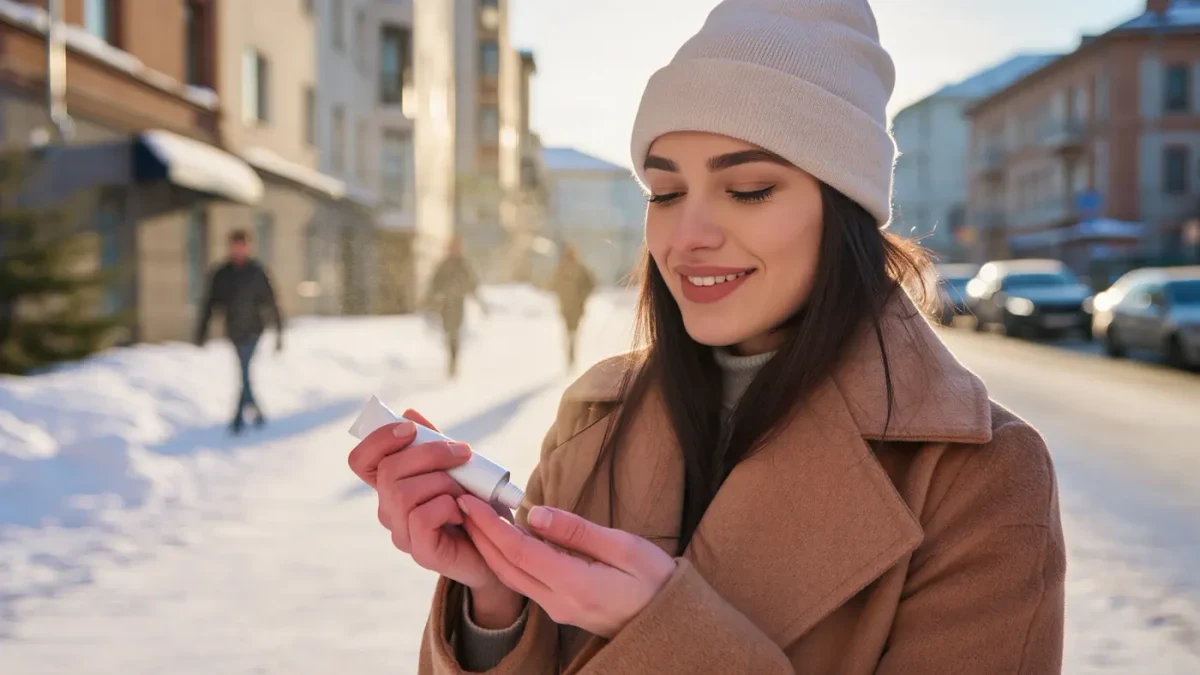
Yes, you need sunscreen in winter. Up to 80 percent of UV rays reflect off snow, according to the Skin Cancer Foundation, and UVA rays — the ones tied to premature skin ageing — stay relatively constant through the year. On a bright January afternoon, a bare face can take more UV exposure than it would on an overcast day in July. The bottle stays on the shelf, in other words, for cosmetic reasons only.
The habit most people lose is not application; it is belief. Summer makes sunscreen's job visible — pink shoulders, salty skin, the satisfying ritual of it. Winter hides the damage while it accrues. Dermatologists have long noted that most lifetime UV exposure comes from incidental, everyday moments: the walk to the car, the lunch-hour errand, the window seat. Federal health guidance compiled at MedlinePlus is blunt on this point — daily, broad-spectrum protection is the single most effective step against both skin cancer and visible ageing.
Does the winter sun actually damage skin?
Two kinds of ultraviolet light matter here, and winter treats them very differently. UVB — the burning, vitamin-D-making kind — drops sharply in northern latitudes between November and February, because the sun sits low and its rays travel through more atmosphere. UVA behaves otherwise. It barely fluctuates, it penetrates cloud cover, and it passes through window glass. It is also the wavelength most associated with pigmentation, fine lines and the slow loss of firmness.
Snow then compounds the problem. Fresh snow reflects up to 80 percent of incoming UV, per the Skin Cancer Foundation, which is why skiers return from the mountains with sunglasses-shaped tan lines in the middle of January. The National Weather Service's UV index runs all year for a reason: a bright winter day at altitude can post numbers that rival a summer afternoon.
What does broad-spectrum actually mean?
The phrase matters more than the number on the front. Broad-spectrum means the formula protects against both UVA and UVB; an SPF figure alone measures only burn protection. In winter, when burning is unlikely but UVA drizzles down regardless, the broad-spectrum label is the entire point. Choose SPF 30 or higher, applied to every exposed area — face, ears, neck, the backs of hands.
| Season | UVB (burn rays) | UVA (ageing rays) | Verdict |
|---|---|---|---|
| Summer | High | High | Everyone complies |
| Overcast spring | Moderate | High — penetrates cloud | SPF still required |
| Bright winter | Low, but snow reflects up to 80% | Nearly unchanged | SPF non-negotiable |
| Indoors by a window | Blocked by glass | Passes through glass | Desk-seat SPF: advised |
How much sunscreen is enough in cold weather?
The dermatological standard is roughly a teaspoon for the face and neck — the oft-cited half-teaspoon for the face alone, or the two-finger rule. Most people apply a quarter to a half of the tested amount, which can reduce the stated SPF to a fraction of its number. Cold weather adds a wrinkle: rich moisturizers sit on top, and powders or concealers rarely deliver the film of protection they advertise. Sunscreen goes on after moisturizer, before makeup, and it needs quantity to work.
Do darker skin tones need winter SPF?
Yes, though the calculus differs. Melanin offers meaningful natural protection against burning — the AAD estimates deeply pigmented skin carries roughly SPF 13 of built-in defense — but UVA-driven pigmentation, melasma and photoageing affect every skin tone. Hyperpigmentation is among the most common complaints dermatologists see in richer complexions, and unprotected winter UVA does its quiet part. The protection question was never really about burning; it is about cumulative exposure.
What is the smartest winter sunscreen routine?
- Keep it by the toothbrush. Habits attach to habits. If the bottle lives next to your cleanser, morning application survives even the darkest 8 a.m. start.
- Use a formula you like. A chalky mineral SPF you resent will lose to no SPF at all. Winter is the ideal season to test creamier, more hydrating textures.
- Reapply at lunch on bright days — every two hours is the standard for continuous exposure, and snow-glare afternoons count.
- Do not skip the mountains. Altitude increases UV intensity by roughly 10 percent for every 1,000 meters, per World Health Organization figures — ski trips are the year's most concentrated exposure days.
- Sunglasses and a brim finish the job. Protection is an outfit, not a single product.
The verdict is short. The sun runs on an annual calendar, not a seasonal one, and the difference between skin that ages gracefully and skin that does not is measured in decades of ordinary days — including the cold ones. Winter SPF is less a resolution than a copyedit: the same habit, with the season removed from its exceptions.
Can you skip SPF on a grey December day?
Only if you plan to stay away from windows as well. Meteorological records show that thick, dark cloud blocks most UV, but the thin, bright overcast typical of northern winters still transmits the majority of it, and UVA slips through almost unbothered. Snow-covered cities compound matters, since reflected light arrives from below, past the edge of a hood or hat brim. Dermatologists who study incidental exposure note that winter errands — a parking garage, a pharmacy run, twenty minutes of daylight through an office window — collect into measurable damage over the years precisely because nobody guards against them.
The practical test is simpler than any chart. If you can see your hand at arm's length outdoors, there is enough light for UVA to reach you. That is a low bar, and it is the reason the honest answer to grey-sky questions is almost always a thin film of broad-spectrum SPF 30 rather than a bare face.
How does SPF fit a winter skincare routine?
Cold air, indoor heating and hot showers strip moisture from the skin's outer layer, so winter routines run richer: heavier creams, occlusive balms, barrier-supporting ingredients. Sunscreen slots in as the final morning step, after moisturizer has settled for a minute. Cream-based SPF formulas pair well with this season — they layer over emollients without pilling, and many now include humectants such as glycerin that pull double duty against central heating. The morning order is fixed: cleanse, treat if you use actives, moisturize, sunscreen, then makeup if you wear it. Lips deserve a mention too; a balm with SPF 15 or higher covers the thin skin that lip cancers favor, per dermatology guidance collected by government health agencies.
Treat the change of season as an audit, not an amnesty. The products may shift — lighter fluids become creams, mattifiers give way to dewier finishes — but the step itself is weatherproof. Winter SPF is the cheapest piece of future-proofing in the bathroom, and it works precisely on the days it feels least necessary.