Start retinol at 0.1 to 0.3 percent, two nights a week, and build from there over roughly three months. That single sentence is the whole beginner protocol, and it is backed by more published research than any other cosmetic ingredient in the bathroom cabinet. Everything else — the purging legends, the buffer-with-moisturizer debates, the dread of the first week — is negotiable. Retinol rewards patience, not intensity, and dermatologists consistently rank consistency above concentration when results are tallied.
Retinoids interact with pregnancy, certain prescriptions and conditions such as rosacea or eczema, so anyone in those categories should put this decision in front of a dermatologist rather than a search bar.
What does retinol actually do?
Retinol is a vitamin A derivative, and skin cells carry receptors that treat it as an instruction. Once converted inside the skin — retinol becomes retinaldehyde, then retinoic acid — it accelerates cell turnover, supports collagen production and helps regulate pigmentation and pores. A frequently cited review by researchers at the University of Michigan summarized decades of evidence: topical retinoids improve fine wrinkles, mottled pigment and rough texture, which is why the prescription-strength versions have been studied as medicines while retinol itself dominates the cosmetic aisle. No other over-the-counter ingredient has a comparable file.
The honest timeline: texture and tone often shift within eight to twelve weeks; deeper lines and firmness take six months and beyond. Anyone promising a transformation in a fortnight is selling enthusiasm.
Which concentration should a beginner choose?
| Strength | Who it suits | How to use it |
|---|---|---|
| 0.01–0.1% | Sensitive or very dry skin | Once or twice weekly to start |
| 0.25–0.3% | Most beginners | Twice weekly, building to nightly |
| 0.5% | Comfortable users after ~3 months | Three to seven nights weekly |
| 1% | Long-term users; max cosmetic strength | Nightly, with moisturizer support |
Concentration is the least clever way to buy results. A 0.3 percent formula used three nights a week outperforms a 1 percent formula that lives in a drawer after week two. Formulation quality matters too: encapsulated retinol releases slowly and tends to irritate less at the same percentage, and most dermatologists would rather see a well-built 0.3 than a harsh 1.
How do you build a retinol schedule?
Count nights, not weeks of courage:
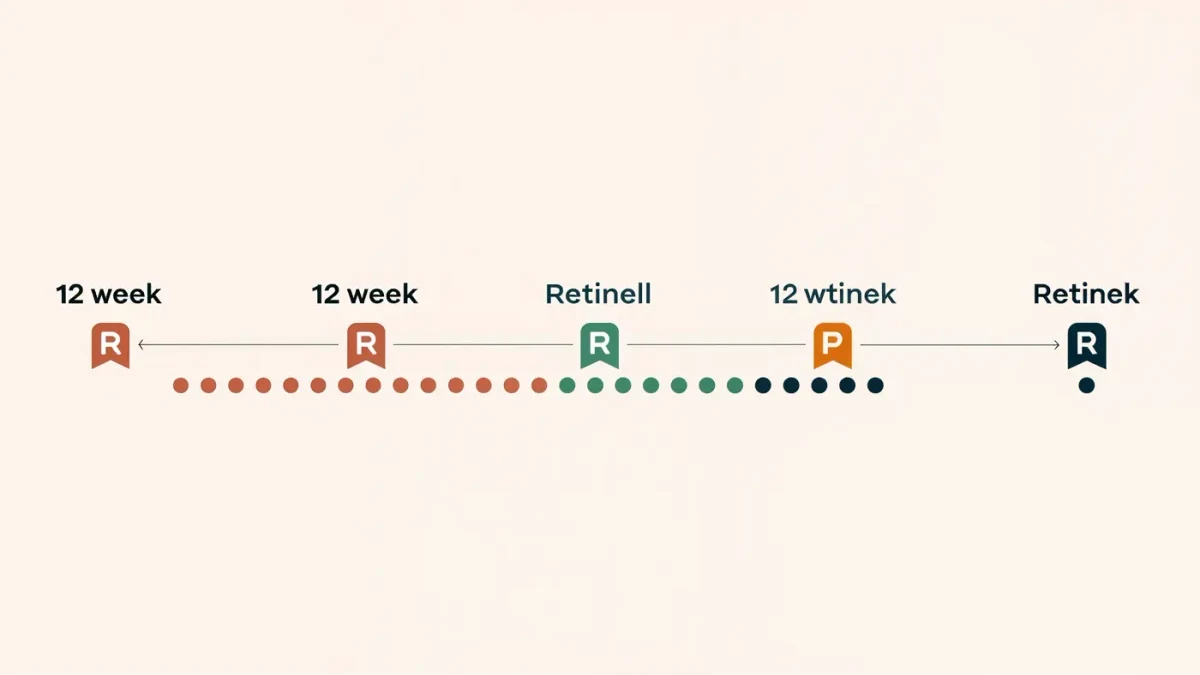
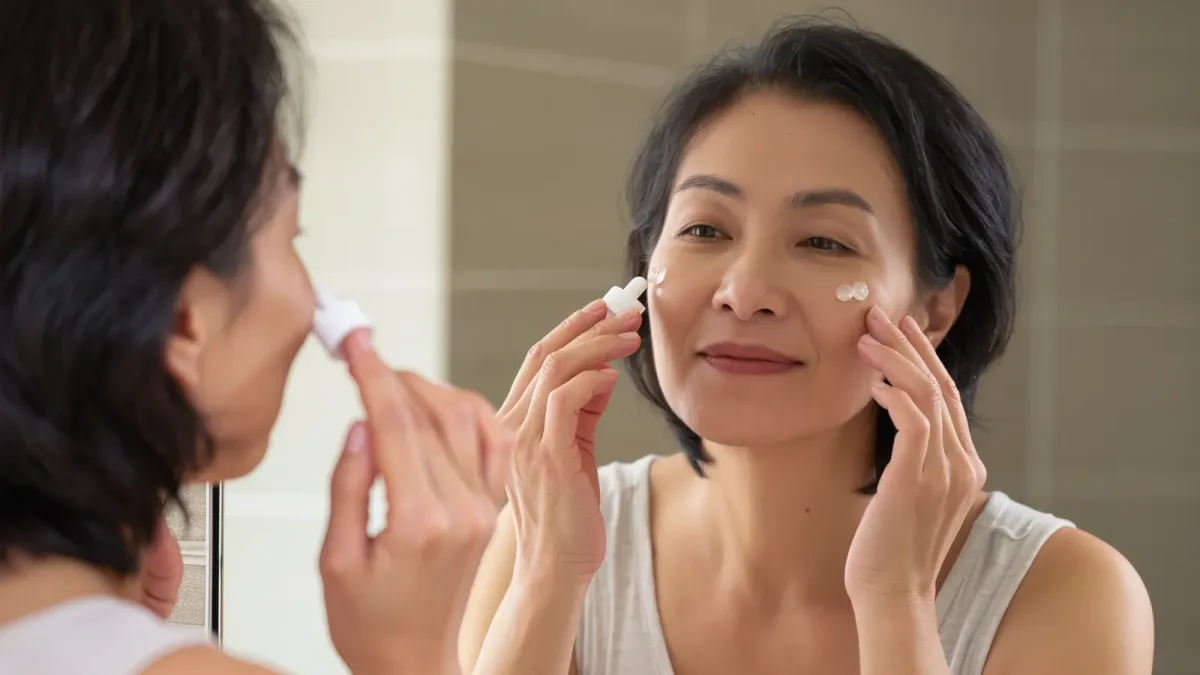
- Weeks 1–2. Retinol twice a week, on dry skin at night, pea-sized amount for the whole face. Sandwich it between moisturizer layers if skin runs sensitive.
- Weeks 3–6. Add a third night if the first fortnight was uneventful. Expect mild flaking; it is a sign of turnover, not damage.
- Weeks 7–12. Move toward every other night. This is the rhythm most people keep for life.
- After three months. Nightly use, a step up in strength, or simply staying put — all legitimate. Results continue for years at moderate doses.
Morning after: cleanse, moisturize, and — without exception — broad-spectrum SPF 30 or higher. Retinol thins the dead surface layer that offered incidental sun defense, and American Academy of Dermatology guidance treats daily sunscreen as part of the retinol product itself, not an optional companion.
Can retinol be mixed with other actives?
Keep the early months simple. Niacinamide, hyaluronic acid, peptides and ceramides layer comfortably alongside it. Vitamin C prefers mornings in a beginner's routine, purely to avoid doubling up on adjustment symptoms. Strong acids (glycolic, salicylic) and benzoyl peroxide can wait until retinol tolerance is established; benzoyl peroxide in particular can oxidize retinol when applied simultaneously. When in doubt, alternate nights rather than stacking products — the skin reads one instruction at a time better than three at once.
What about the purge, peeling and dryness?
Mild flaking and tightness in the first two to three weeks are expected and manageable: reduce frequency, add moisturizer, do not scrub. True retinol 'purging' — a temporary surge of breakouts as clogs surface faster — is documented for prescription retinoids used against acne and is plausible with cosmetic retinol, but it resolves within a single skin-cell cycle, roughly four to six weeks. Persistent redness, burning or swelling is not an adjustment phase; it is a signal to stop and reassess strength or formula. Retinol use around the eyes is fine in cream form, applied sparingly along the orbital bone; the myth of untouchable eye zones dates from stronger, older formulas.
The verdict: retinol is a decade-long habit disguised as a thirty-second application. Begin at the bottom of the dose range, let the calendar do the escalation, and let sunscreen protect the investment every single morning.
What should a beginner buy first?
A single retinol product at 0.25–0.3 percent, ideally encapsulated, from a brand that publishes its concentration rather than hinting at it. Skip the multi-tasking 'retinol night cream' hybrids at first — formulas that combine retinol with acids or high-percentage vitamin C complicate the attribution problem: when skin reacts, you will not know which ingredient caused it. A plain fragrance-free moisturizer is the second purchase; it does more for retinol tolerance than any fancy serum. Budget genuinely does not dictate outcomes here, because the molecule is the molecule — what varies between price points is texture, elegance and shelf stability. Store the bottle away from light, replace it if it has been open for more than a year, and resist the shelf of partial solutions that retinol marketing encourages.
How long should someone stay on retinol?
Indefinitely, if it suits. Longitudinal dermatology studies of prescription tretinoin followed subjects for up to four years with continued improvement and no cumulative harm, and cosmetic retinol behaves on the same mechanism at lower strength. The skin does not build tolerance to the results, only to the irritation — which is why a routine that felt harsh in month one becomes effortless by month six. Some users dial back in summer to a few nights weekly, which is a comfort choice rather than a chemical necessity, provided sunscreen remains daily. Others pause during pregnancy, on medical advice, and resume after. The ingredient rewards the long view; a decade of three nights a week will outperform any short, heroic burst, and the skin's own renewal cycle keeps responding for as long as the instruction keeps arriving.