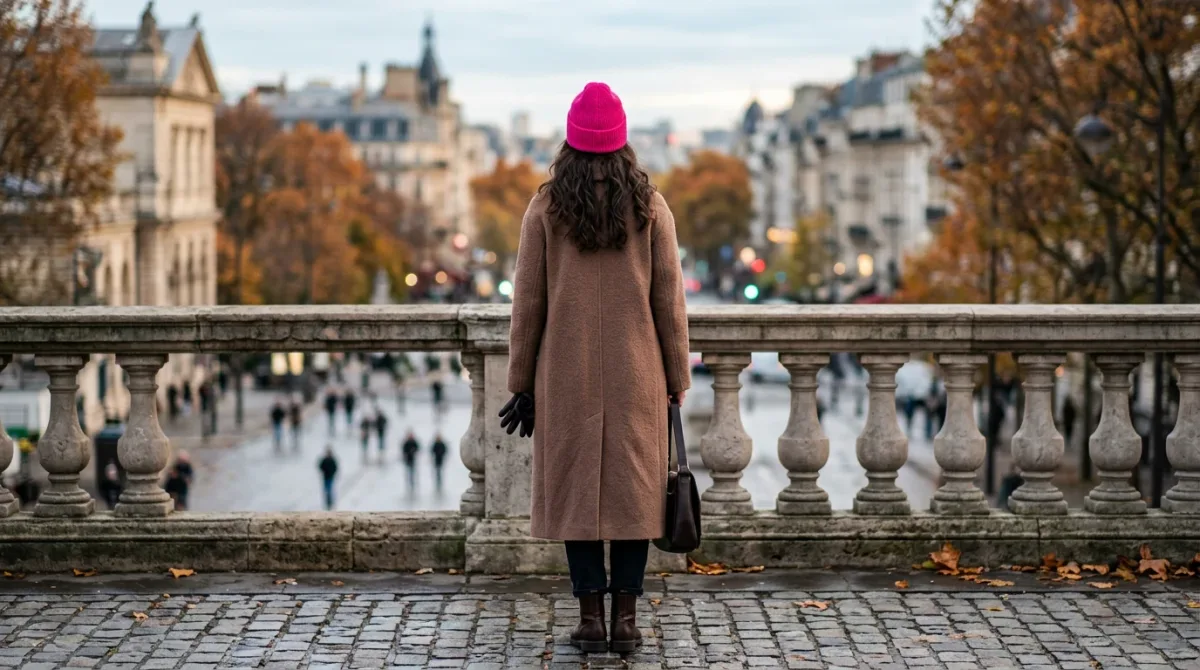
Fall 2026 is shaping into a season of earthy restraint punctuated by jolts of color, according to the Pantone Color Institute's ten-hue New York Fashion Week forecast released February 11, 2026 — a reading the runways themselves appear to confirm, though individual houses interpreted the mood in sharply different directions, from tomato-red maximalism to muted, moss-toned suiting.
What Colors Did Pantone Actually Forecast?
Pantone's New York Fashion Week Autumn/Winter 2026 report, published February 11, 2026, names ten hues meant to anchor the season: Muted Clay, Neptune Green, Green Envy, Arabian Spice, Foxglove, Festival Fuchsia, Red Mahogany, Acacia, All Aboard, and Burnt Olive.
The palette reads as two conversations happening at once. On one side sit the quiet, mineral tones — Muted Clay, Burnt Olive, Acacia, Red Mahogany — the kind of colors that photograph well in low autumn light and pair easily with camel coats already in most closets. On the other side sit the volume-up shades: Festival Fuchsia, Green Envy, Foxglove, colors built to read from across a room rather than blend into one. Leatrice Eiseman, executive director of the Pantone Color Institute, framed the split directly: "Consumers are seeking wearable colors with true versatility, while simultaneously reaching for color that injects energy, surprise, and spontaneity." That reads less as a single directive than a permission slip — the report is closer to "expect both moods to coexist in stores this fall" than "wear this exact shade," and shoppers hoping for one definitive fall 2026 It Color will not find one on Pantone's own list.
Do the Runways Back This Up?
Largely, yes — with real disagreement about degree. A survey of the fall 2026 fashion month shows tracked ten recurring runway trends, among them "Fire Starter," a tomato-red, head-to-toe treatment presented at Balenciaga, Amiri, Valentino, Prada, and 3.Paradis — a near-literal echo of Pantone's louder shades. At the quieter end, "Grandpa Sweaters," vintage-inflected cable-knit and Fair Isle pieces, appeared at Altuzarra, Acne Studios, Zegna, Louis Vuitton, Dries Van Noten, Marni, Giorgio Armani, and Chloé, tracking closer to the report's earth-toned half.
Other runway threads describe silhouette rather than palette and sit outside the color conversation entirely: "Waist of Time," decorative belts worn loose or cinched, shown at Valentino, Emporio Armani, Paul Costelloe, Off-White, Joseph, and Etro; and "The Smoking Gun," reworked tuxedo dressing seen at Dior, BOSS, Saint Laurent, Polo Ralph Lauren, Alexander McQueen, Michael Kors, Khaite, Juun.J, Jacquemus, and Dolce & Gabbana. No house named here has confirmed working from Pantone's forecast directly — color forecasting and runway design run on different production timelines and are produced by different teams — so the overlap between the two reports is best read as convergence, not coordination.
Two other runway trends the survey tracked leaned toward texture rather than color or cut: "Under Cover," translucent and sheer layering shown at Miu Miu, Chanel, Victoria Beckham, Tom Ford, and Simone Rocha, and "Dot Dot Dot," polka-dot prints highlighted at Tanner Fletcher, Dolce & Gabbana, Dior, Off-White, and Jacquemus. Neither maps cleanly onto Pantone's color list, a useful reminder that a single season's forecast rarely explains everything a fashion week produces — color, silhouette, and texture stories tend to run in parallel, not lockstep.
How Does This Translate Off the Runway?
For readers translating fashion month into an actual wardrobe, the throughline across both reports is pairing, not matching. A muted-tone coat — clay, olive, mahogany — reads as this season's neutral, the way camel or navy has in past years, and can carry a single high-volume piece, a fuchsia scarf or a green bag, without competing with it. Tuxedo dressing and belted waists, the two silhouette trends with the widest designer adoption in the runway survey, work with either half of the palette, which may be why they turned up at houses as different in temperament as Saint Laurent and Polo Ralph Lauren. The category worth more caution is "Fire Starter" red: five houses showing it is a real signal, but head-to-toe red is also a look that dates a wardrobe fast when bought as a full outfit rather than a single piece.
What's Still Unconfirmed
Two things are worth flagging before shopping ahead of the season. First, Pantone's fashion color reports are forecasts timed to fashion week, not guarantees of what will sell — the institute frames its own list as a range of wearable options rather than a single prediction, in keeping with Eiseman's comment about versatility competing with spontaneity. Second, the runway trends reflect shows staged for fall 2026 delivery, so retail availability in most markets lands closer to September and October 2026; readers shopping before then are reading runway samples, not store racks.
Entertainment Aside: The Fall Palette Through a Zodiac-Season Lens
The following is a light entertainment feature from Noor's astrology desk — a styling game, not a forecast, and not guidance for any real-world decision.
Purely for fun, here is one way to sort Pantone's ten-color list by zodiac season rather than by mood board: the earth tones — Muted Clay, Burnt Olive, Acacia — suit the grounded, harvest-adjacent energy pop culture assigns to Virgo and Libra season, roughly late August through October, while the high-volume shades — Festival Fuchsia, Green Envy, Foxglove — fit the intensity astrology culture tends to associate with Scorpio season, late October into November. Red Mahogany and Arabian Spice split the difference: warm enough for early autumn layering, deep enough to carry into the darker Sagittarius stretch of the calendar. None of this is a claim about what the stars mean for your closet — it is a seasonal color game dressed up in zodiac language, entirely separate from the sourced reporting above.
For a related style perspective, read Sheer Layering Takes Command: What Fall 2026 Runways Revealed.